
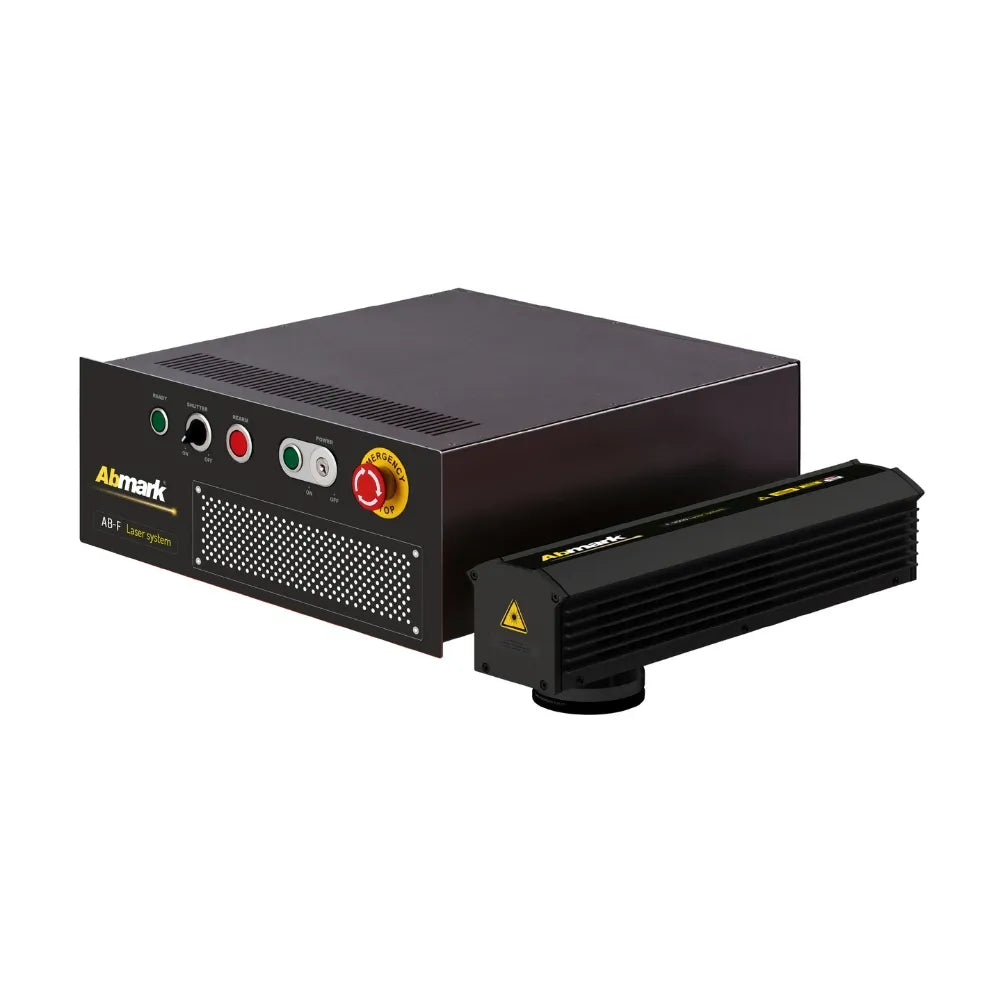
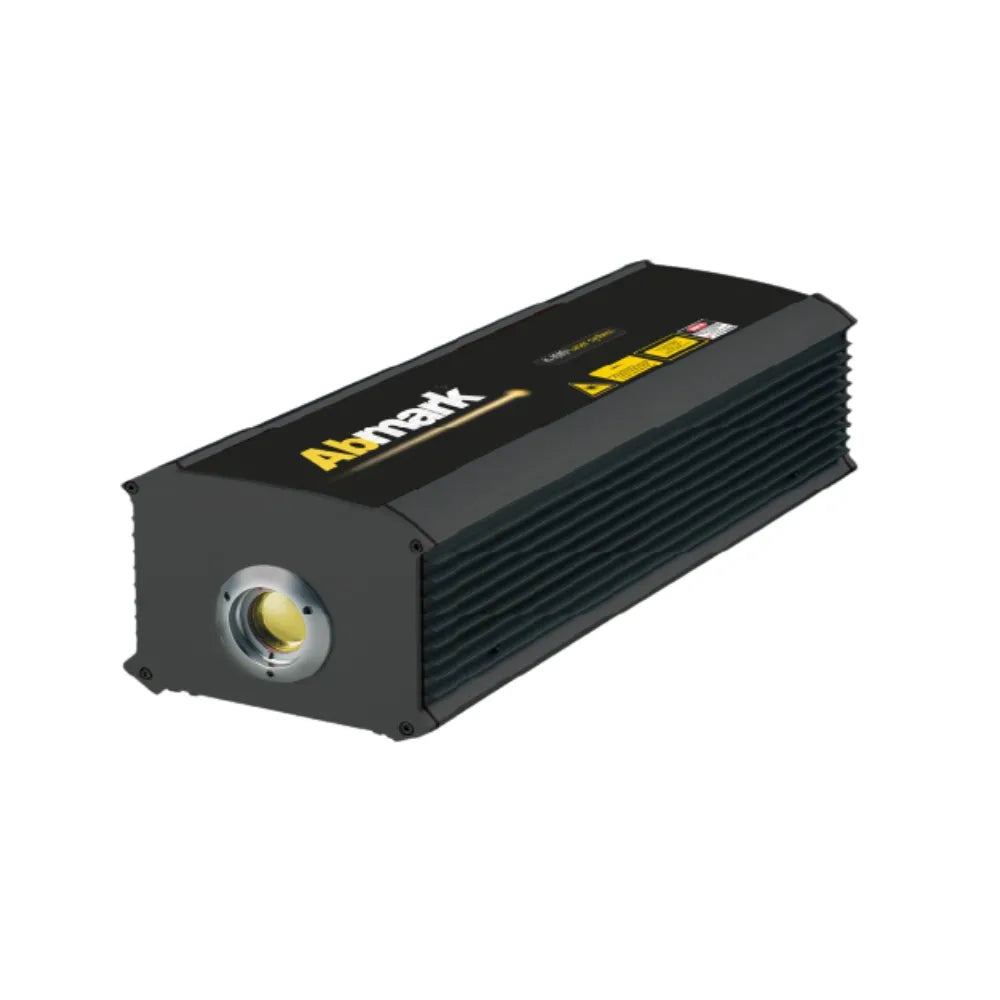
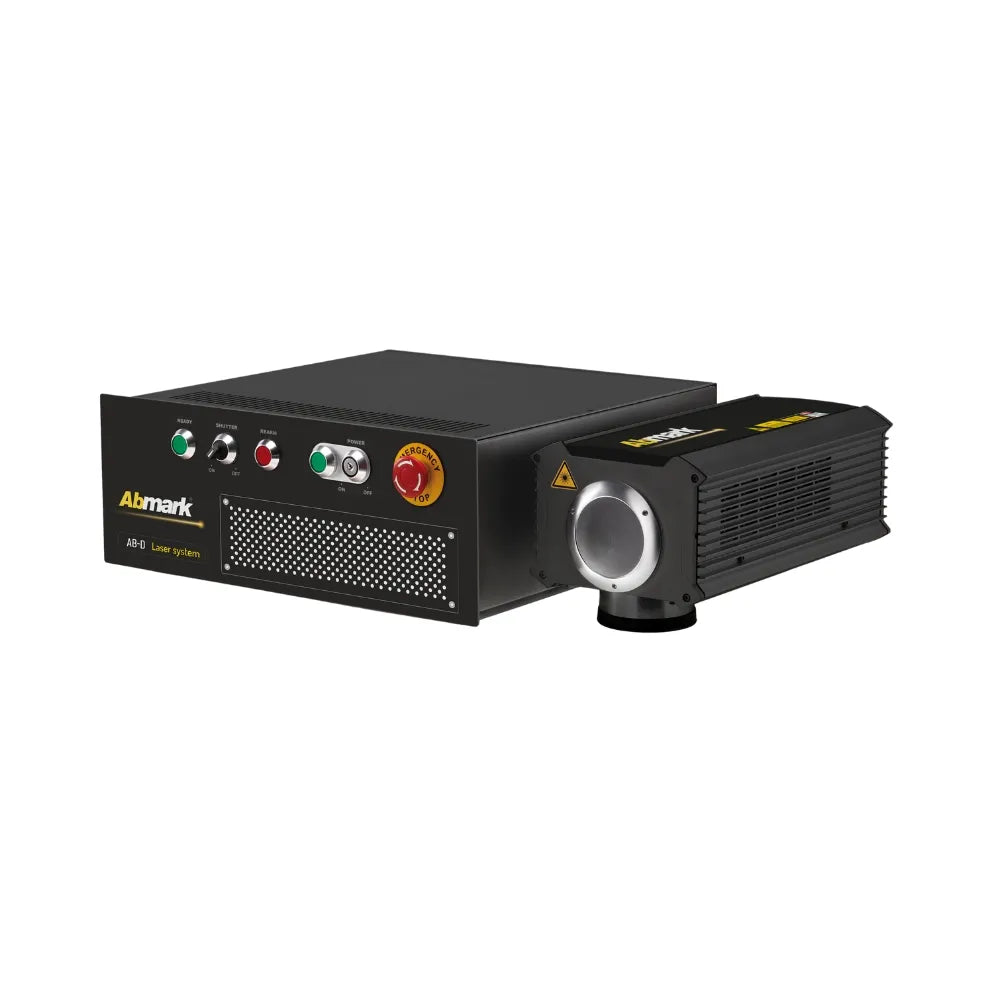
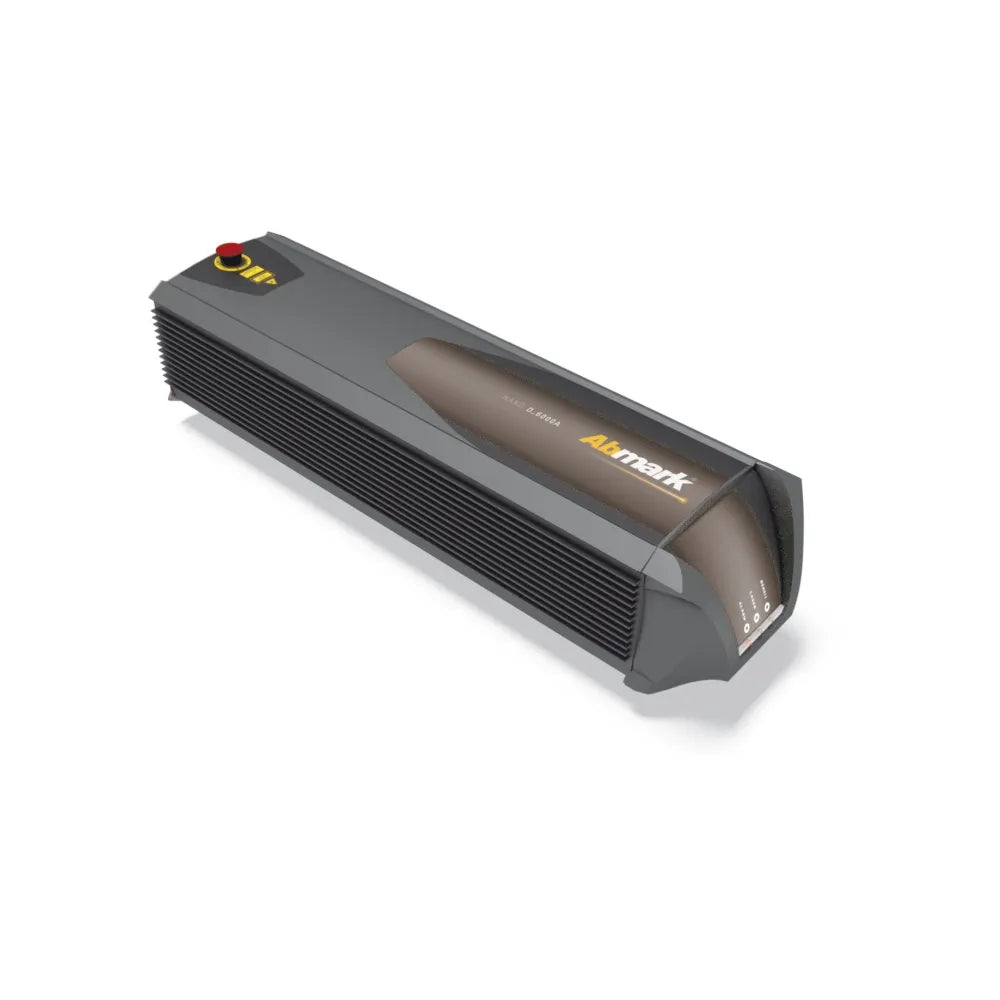
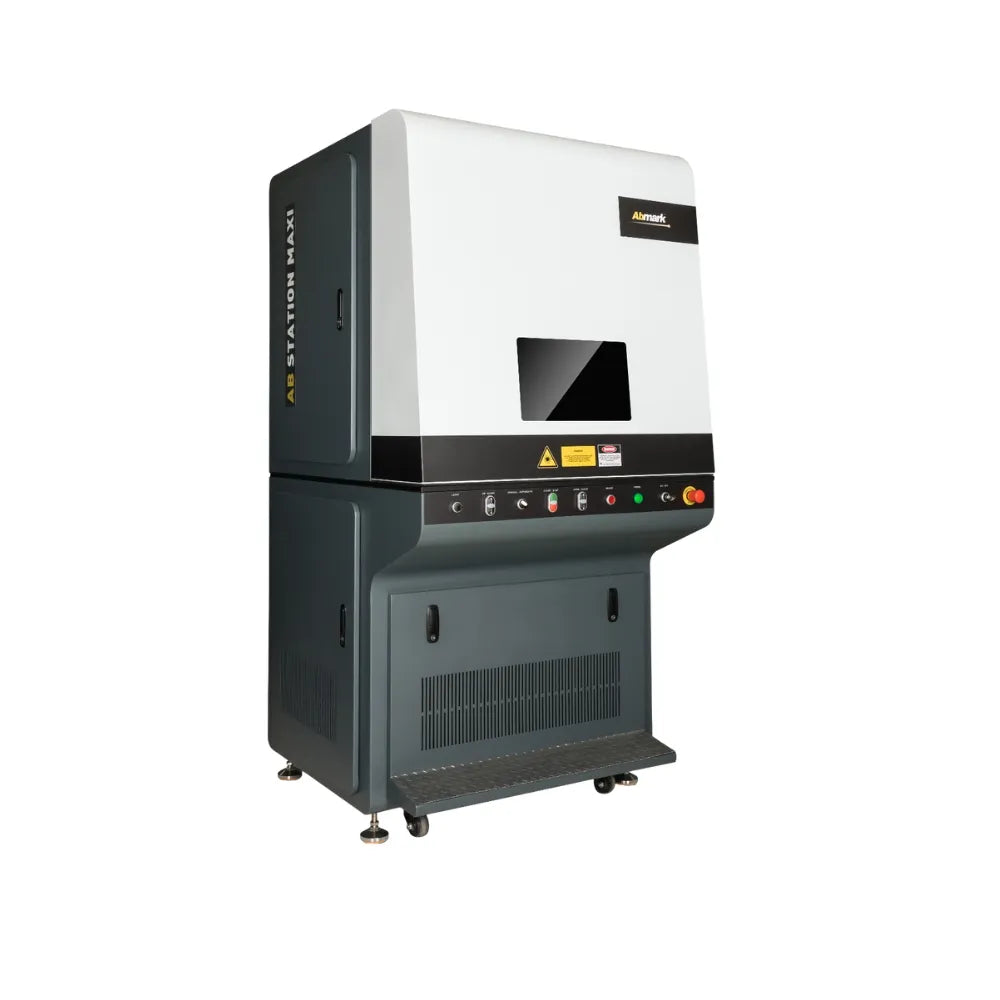
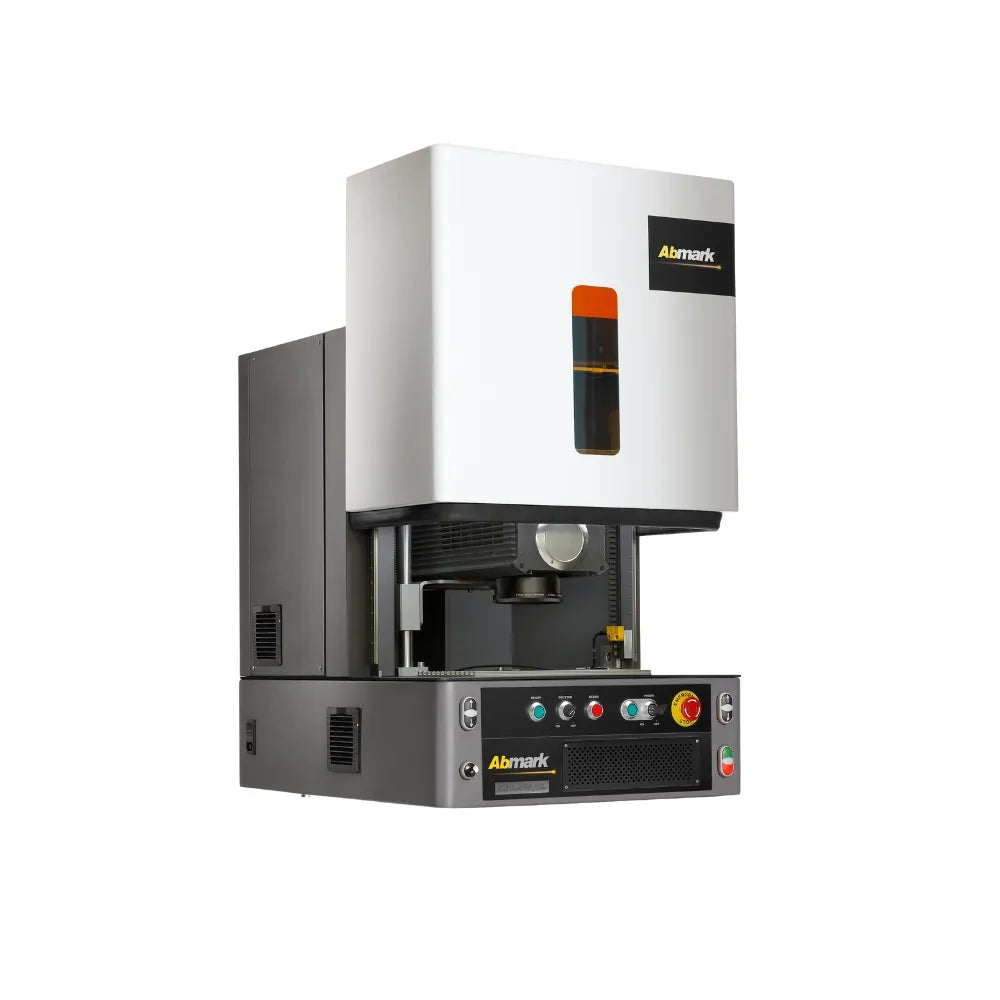
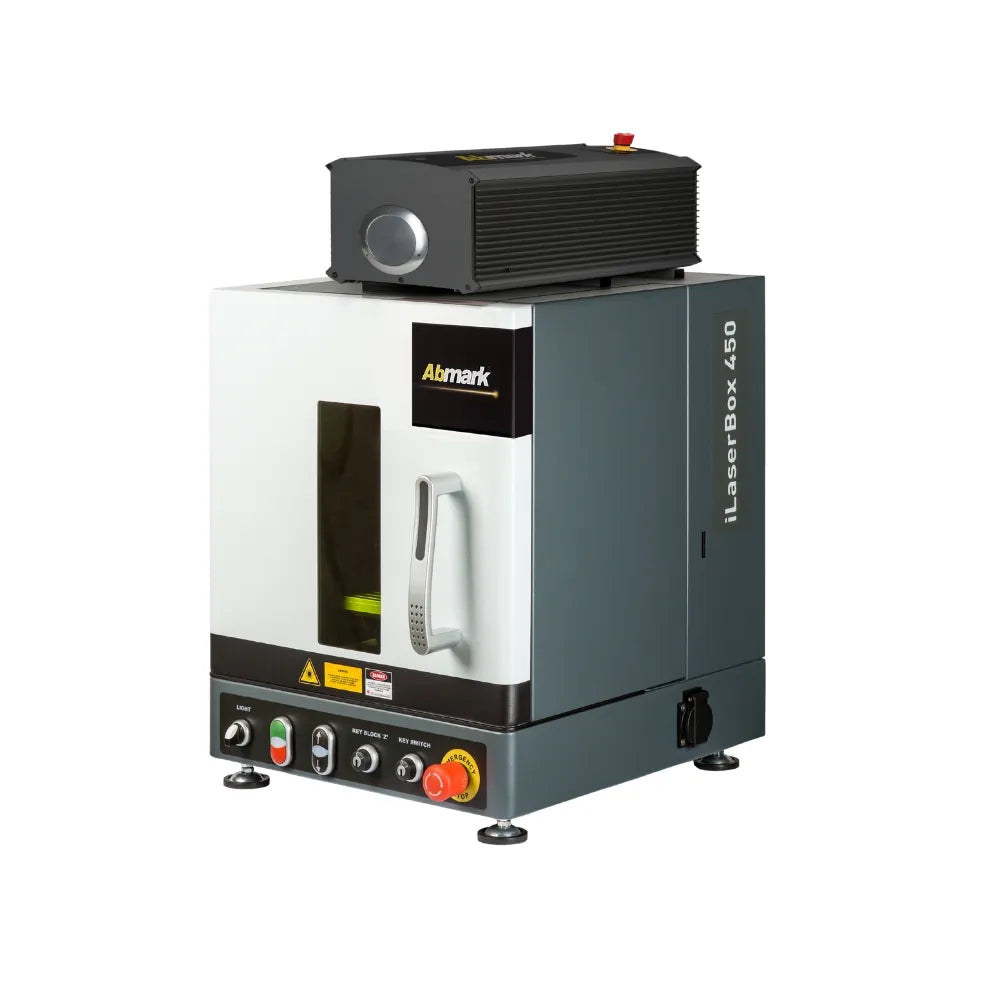
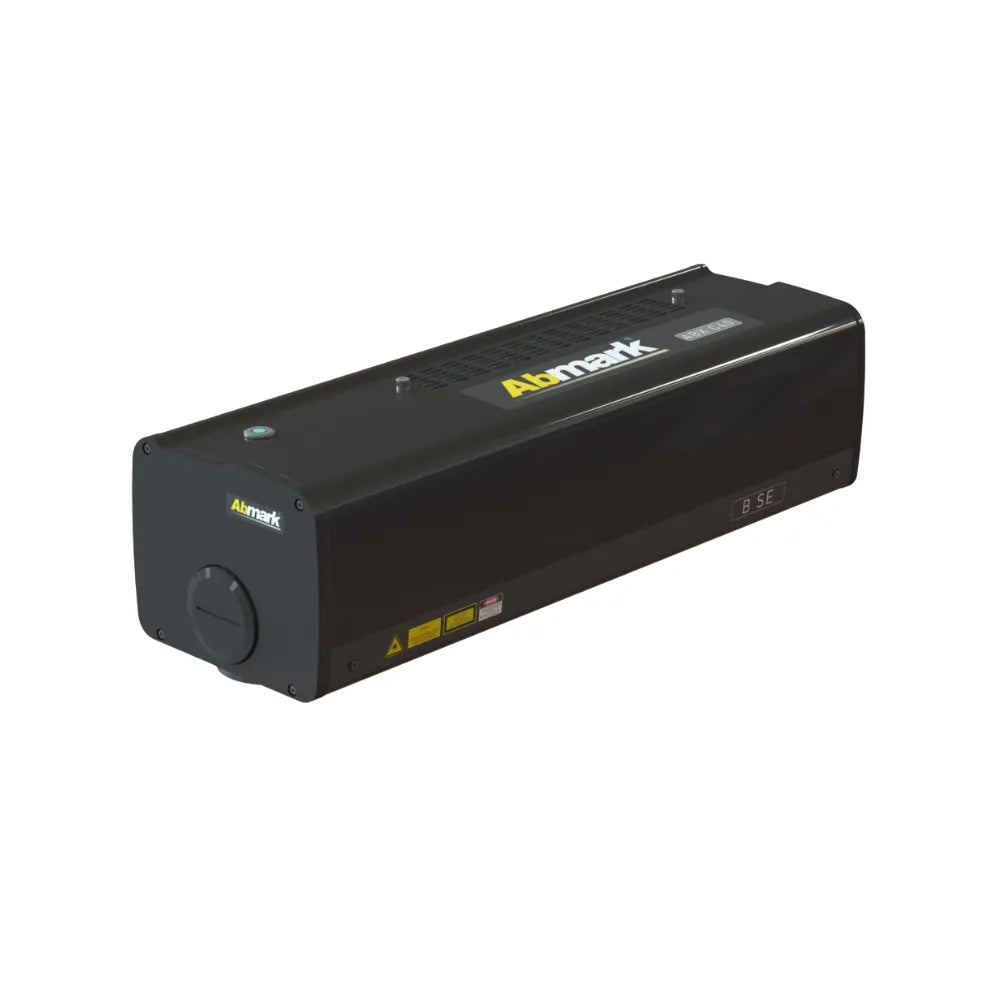
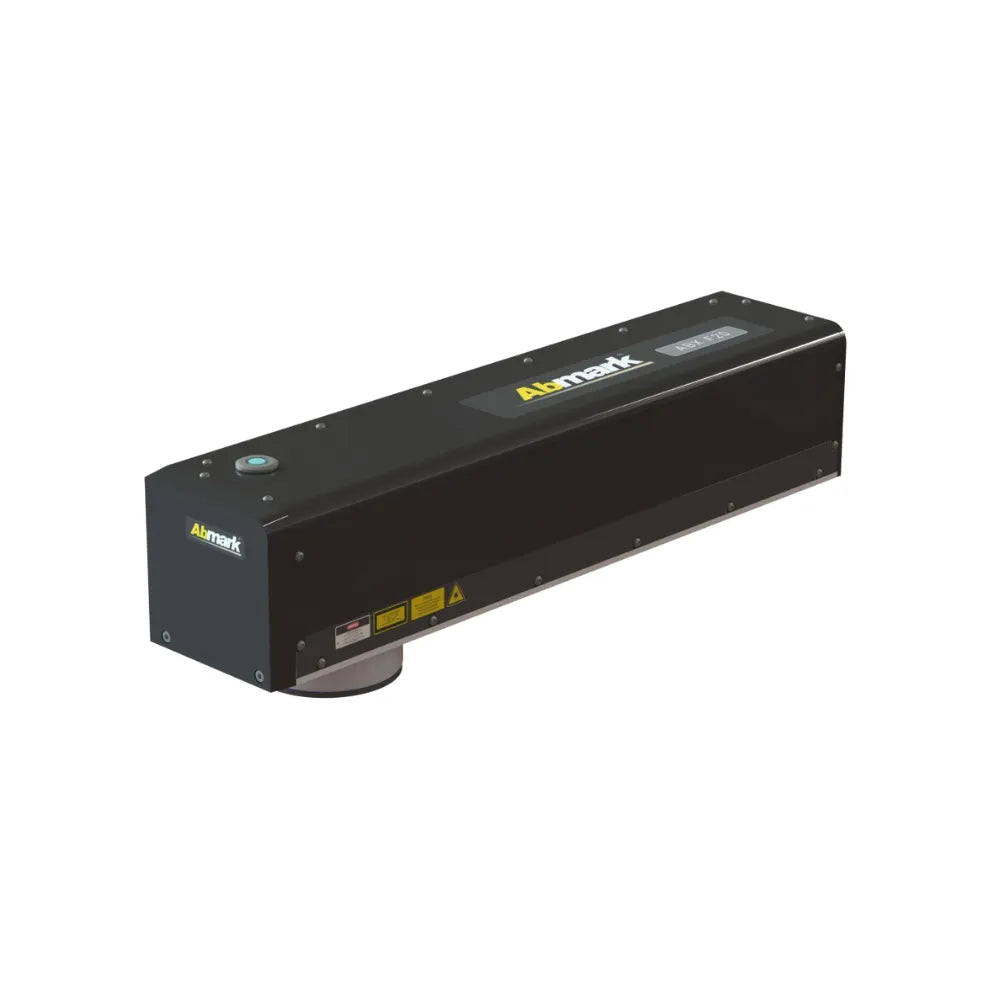
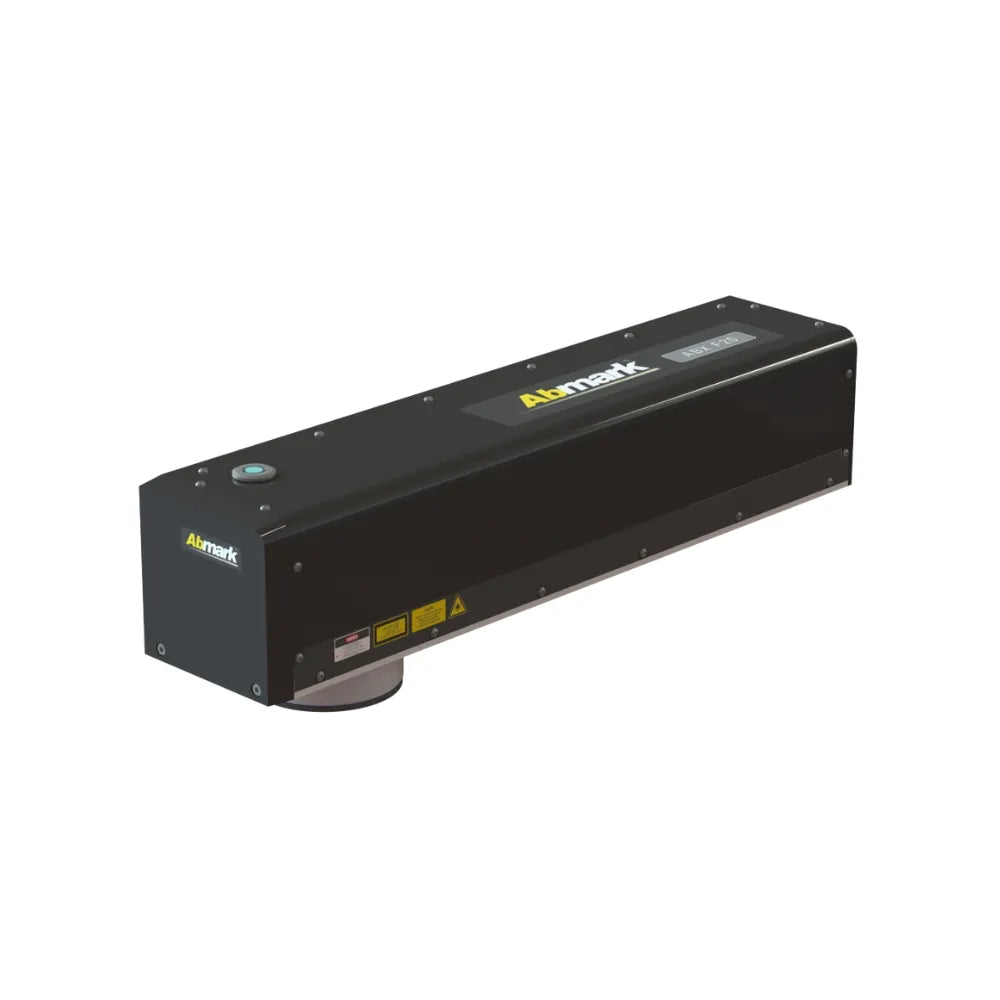
Fiber lasers are used for marking metals and hard plastics with permanent, high-precision engravings.
Laser systems are high-performance marking solutions engineered for precision, speed, and durability in industrial environments. As an industrial equipment supplier, Redemac provides reliable laser marking solutions for a variety of manufacturing applications. Designed to mark a wide range of materials, including plastics, metals, glass, and packaging substrates, ABmark lasers deliver permanent, high-contrast codes ideal for traceability, branding, and regulatory compliance. Available in fibre, CO₂, and UV laser technologies, these systems offer flexible integration options for both standalone and inline production setups. With user-friendly software, low maintenance requirements, and superior marking quality, ABmark laser systems provide a reliable and efficient alternative to traditional printing methods.
Products
Industrial Laser Marking Systems (Fiber & CO2 Lasers)
Industrial laser marking systems are advanced coding and engraving solutions used to create permanent, high-precision marks on a wide range of materials. The two most widely used laser technologies in industrial applications are Fiber Lasers and CO2 Lasers, each designed for specific materials and use cases.
Laser marking machines are widely used across industries such as automotive, electronics, packaging, pharmaceuticals, and manufacturing to mark serial numbers, barcodes, logos, QR codes, and traceability data. These systems provide non-contact, high-speed, and maintenance-free printing, making them one of the most efficient coding technologies available today.
What is a Fiber Laser?
A fiber laser is a type of laser marking system that uses a fiber optic cable doped with rare-earth elements to generate a high-intensity laser beam. This beam is used to engrave or mark materials with extreme precision and durability.
Fiber lasers are especially effective on metals and hard plastics, making them ideal for industrial applications where permanent marking is required.
They are commonly used for:
- Marking serial numbers and barcodes on metal parts
- Engraving logos and branding on tools and components
- Creating permanent identification marks for traceability
Fiber laser systems are known for their:
- High speed and precision
- Long lifespan (low maintenance)
- Ability to mark very fine details
Because of their efficiency and reliability, fiber lasers are widely used in the automotive, aerospace, and electronics industries.
What is a CO2 Laser?
A CO2 laser is a gas-based laser system that uses carbon dioxide as the active medium to generate a laser beam. Unlike fiber lasers, CO2 lasers are best suited for non-metal materials, particularly organic and flexible substrates.
CO2 lasers are widely used in the packaging and labeling industries for marking:
- Plastics and polymers
- Glass and ceramics
- Paper, cardboard, and wood
- Flexible packaging films
These lasers produce smooth, high-quality marks without damaging the material, making them ideal for applications where surface integrity is important.
CO2 laser systems are valued for:
- Versatility across non-metal materials
- Clean and precise marking
- High-speed operation in production lines
How Laser Marking Works
Laser marking works by directing a focused beam of light onto a material surface to alter its appearance or structure. This process can create marks through engraving, etching, annealing, or foaming, depending on the material and laser type.
The process involves:
- A laser source generates a high-energy beam
- The beam is directed through optical components
- The laser interacts with the material surface
- The material changes color or structure to form a mark
Because this is a non-contact process, there is no wear and tear on the equipment, resulting in minimal maintenance and consistent performance.
Fiber Laser vs CO2 Laser: What’s the Difference?
The difference between a fiber laser and a CO2 laser mainly depends on the material, application, and type of marking required. Fiber lasers are used for metals and high-precision engraving, while CO2 lasers are used for non-metals and surface marking applications such as packaging and labels.
A fiber laser is best suited for marking metals and hard plastics. It delivers deep engraving with very high precision, making it ideal for industrial parts, tools, and components. Fiber lasers require very low maintenance and offer high-speed performance, which makes them perfect for demanding production environments.
A CO2 laser, on the other hand, is designed for non-metals and organic materials. It is commonly used for marking packaging, labels, and films. CO2 lasers typically produce surface-level marking with a smooth finish, making them suitable for applications where visual appearance is important. They also operate at high speed and require low maintenance.
In summary, fiber lasers are ideal for permanent, high-precision marking on metals, while CO2 lasers are better suited for non-metal materials and flexible packaging applications.
Applications of Laser Marking Systems
Laser marking systems are used across a wide range of industries due to their versatility and durability.
In the automotive industry, fiber lasers are used to mark engine parts, tools, and components for traceability and compliance.
The electronics industry uses laser marking for the precise identification of small components such as circuit boards and chips.
In the packaging industry, CO2 lasers are commonly used to print batch numbers, expiry dates, and barcodes on flexible packaging materials.
The pharmaceutical and medical sectors rely on laser marking for permanent and tamper-proof labeling of products.
Additionally, industries such as aerospace, manufacturing, and logistics benefit from laser systems for high-speed, permanent marking solutions.
Benefits of Fiber and CO2 Laser Systems
Laser marking systems offer several advantages over traditional coding technologies.
One of the most significant benefits is permanent marking, which ensures that codes and information remain intact throughout the product lifecycle.
Laser systems also provide high precision and consistency, making them ideal for detailed graphics and small text.
Because they are non-contact systems, there is no need for inks, ribbons, or consumables, resulting in lower operating costs and reduced maintenance.
Additionally, laser marking is an environmentally friendly solution, as it eliminates the need for chemicals and produces minimal waste.
How to Choose Between Fiber and CO2 Lasers
Choosing the right laser system depends primarily on the material and application requirements.
If your application involves metals or hard plastics, a fiber laser is the best choice due to its high power and precision.
For applications involving non-metal materials such as plastic films, glass, or paper, a CO2 laser is more suitable.
Other factors to consider include:
- Production speed
- Marking depth requirements
- Integration with existing systems
- Budget and operational costs
By understanding your specific needs, you can select the most efficient and cost-effective laser solution.
Frequently Asked Questions
What is a fiber laser used for?
What is a CO2 laser used for?
CO2 lasers are used for marking non-metal materials such as plastics, glass, paper, and packaging films.
Which is better: fiber laser or CO2 laser?
It depends on the material. Fiber lasers are better for metals, while CO2 lasers are ideal for non-metals.
Are laser marking machines maintenance-free?
Laser systems require minimal maintenance compared to ink-based systems since they do not use consumables.
What industries use laser marking systems?
Industries such as automotive, electronics, packaging, pharmaceuticals, and manufacturing widely use laser marking.