
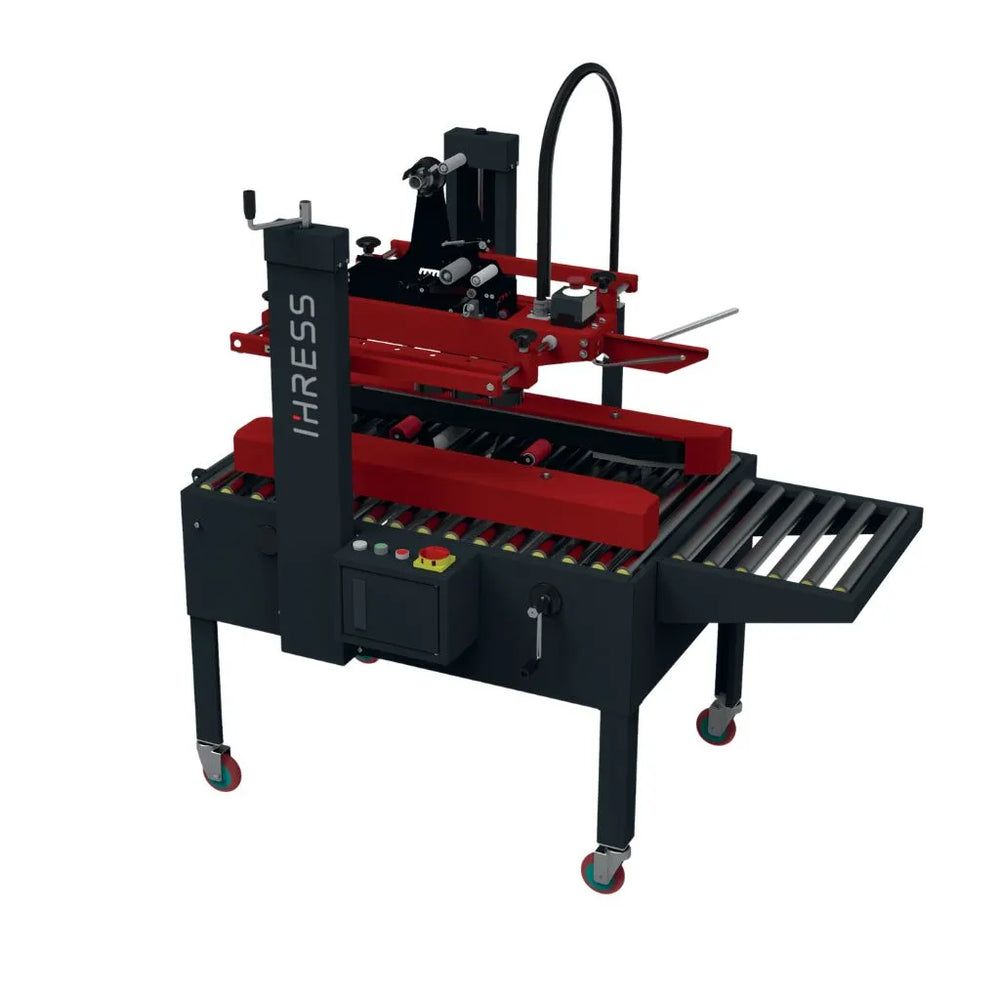
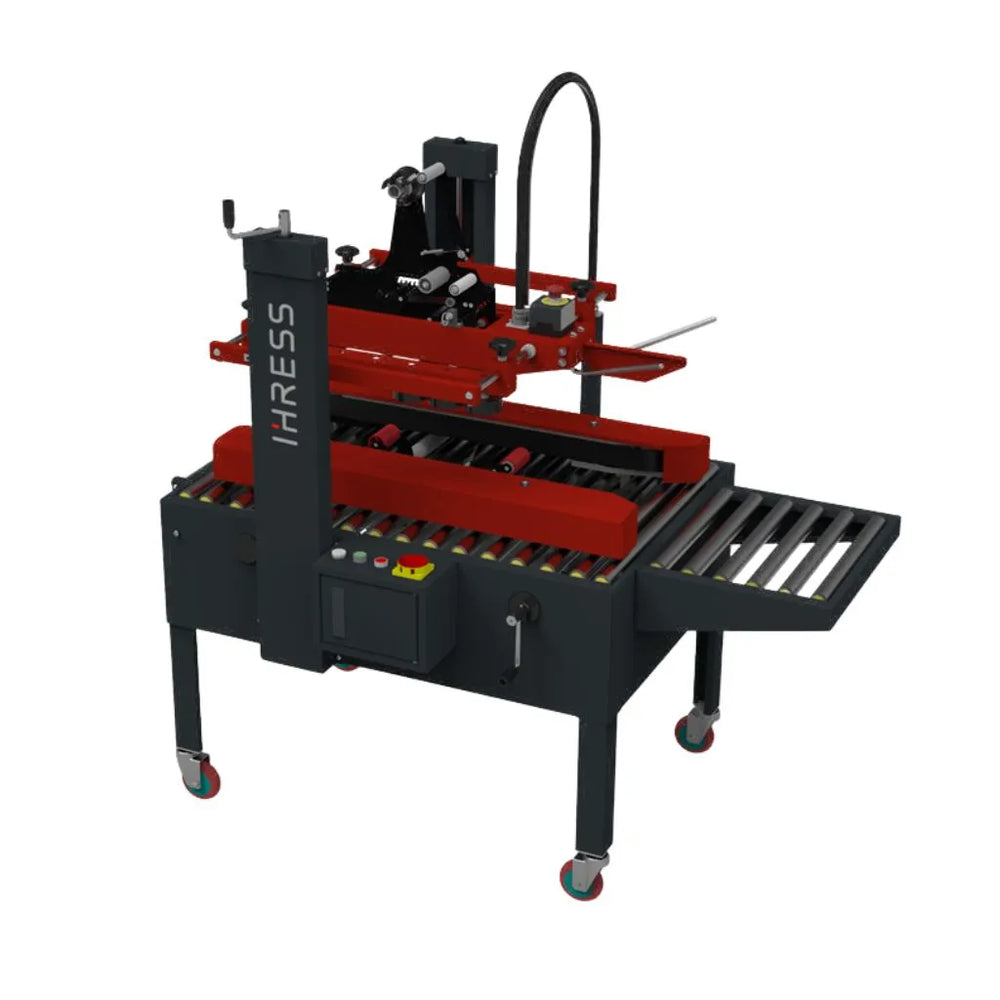
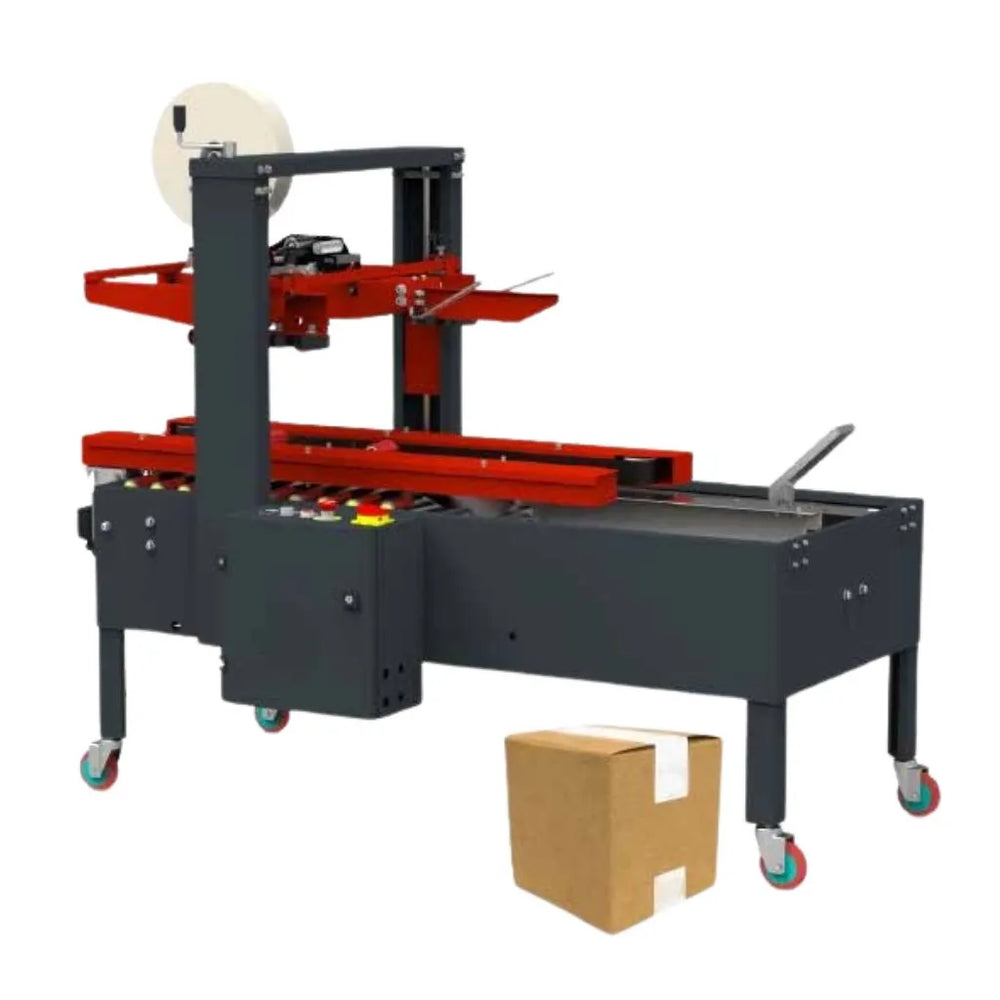
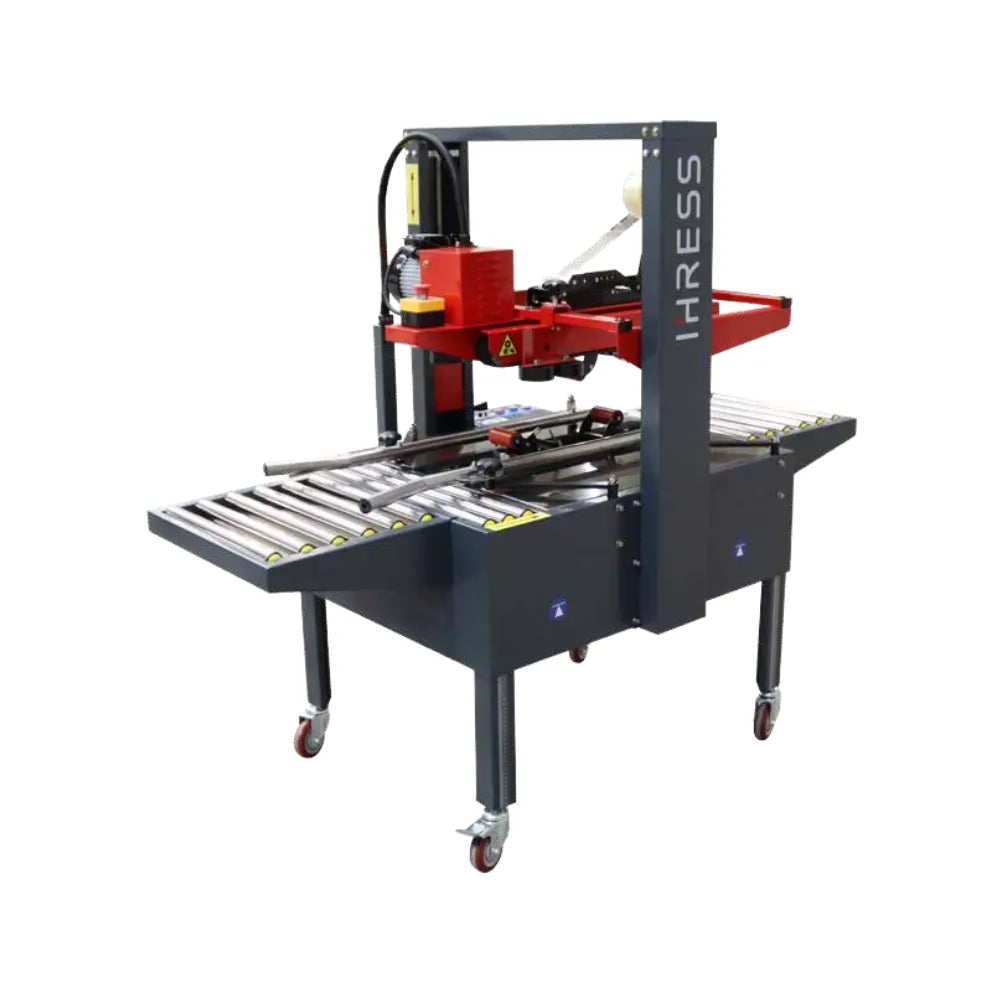
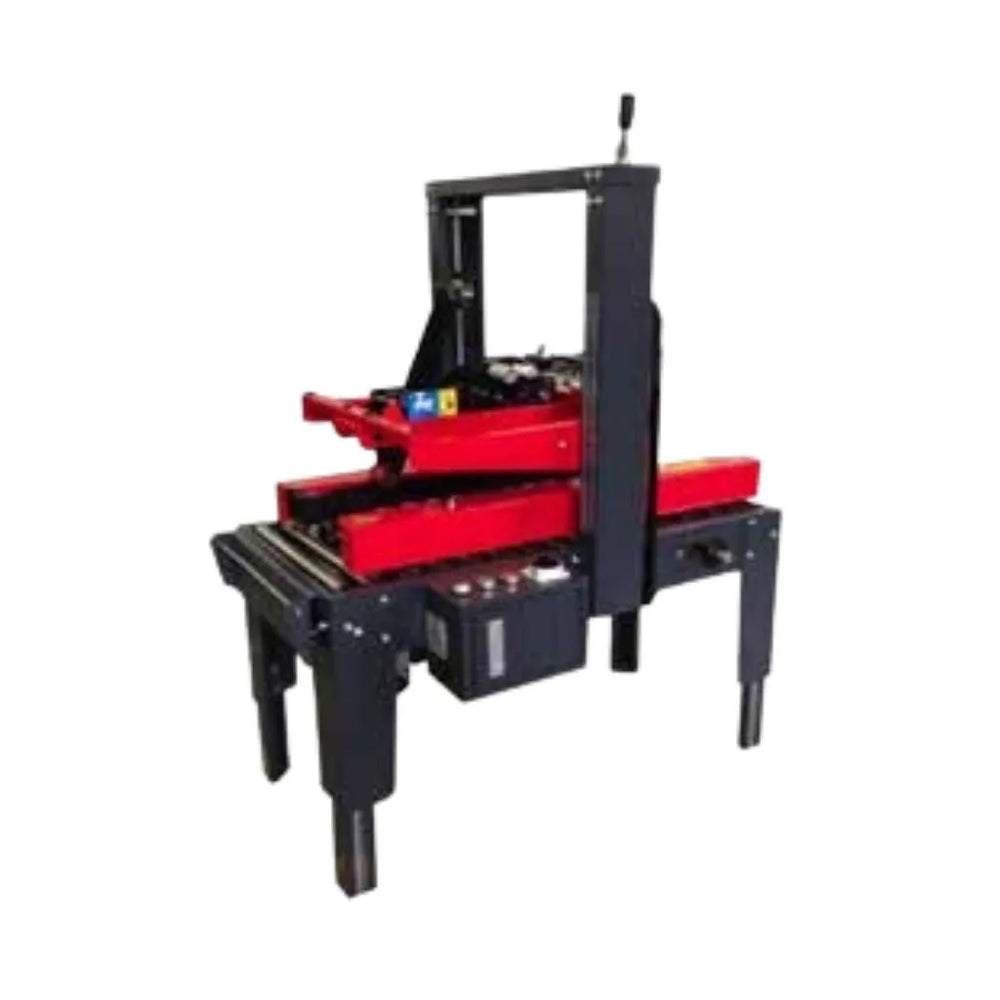
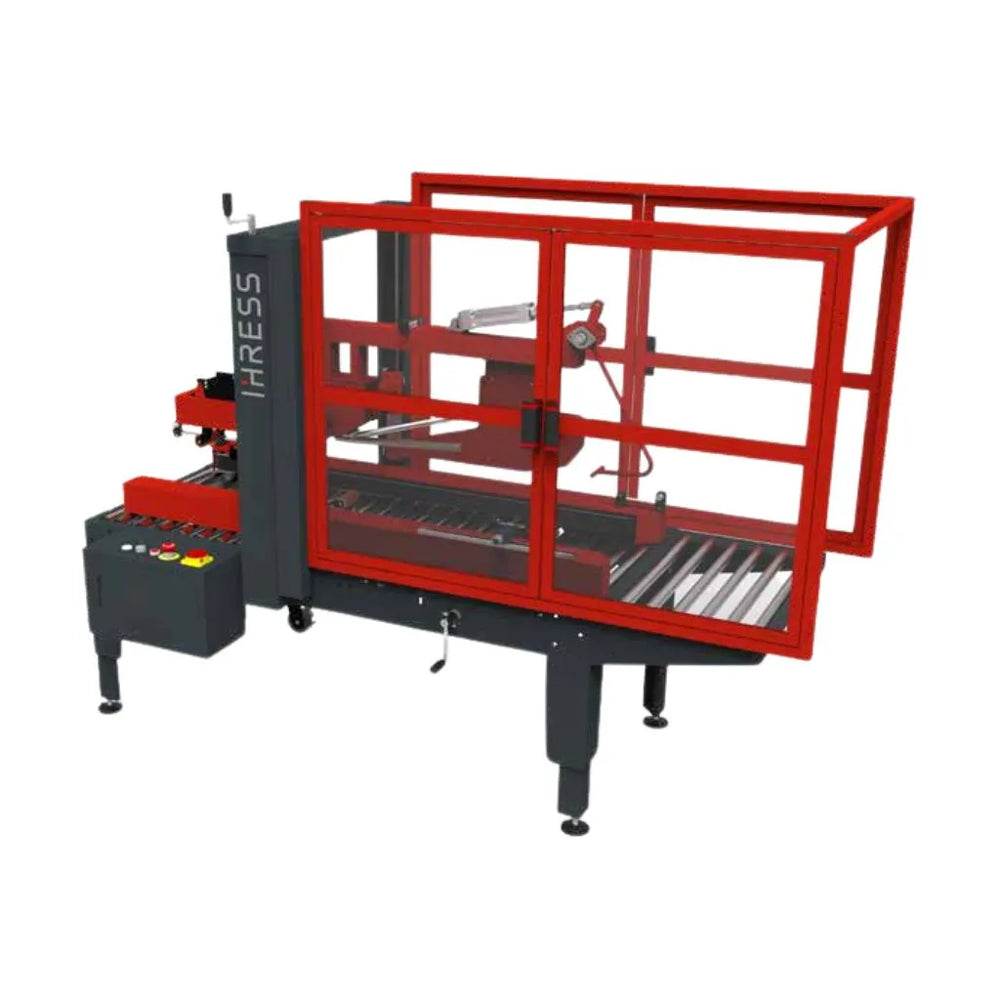
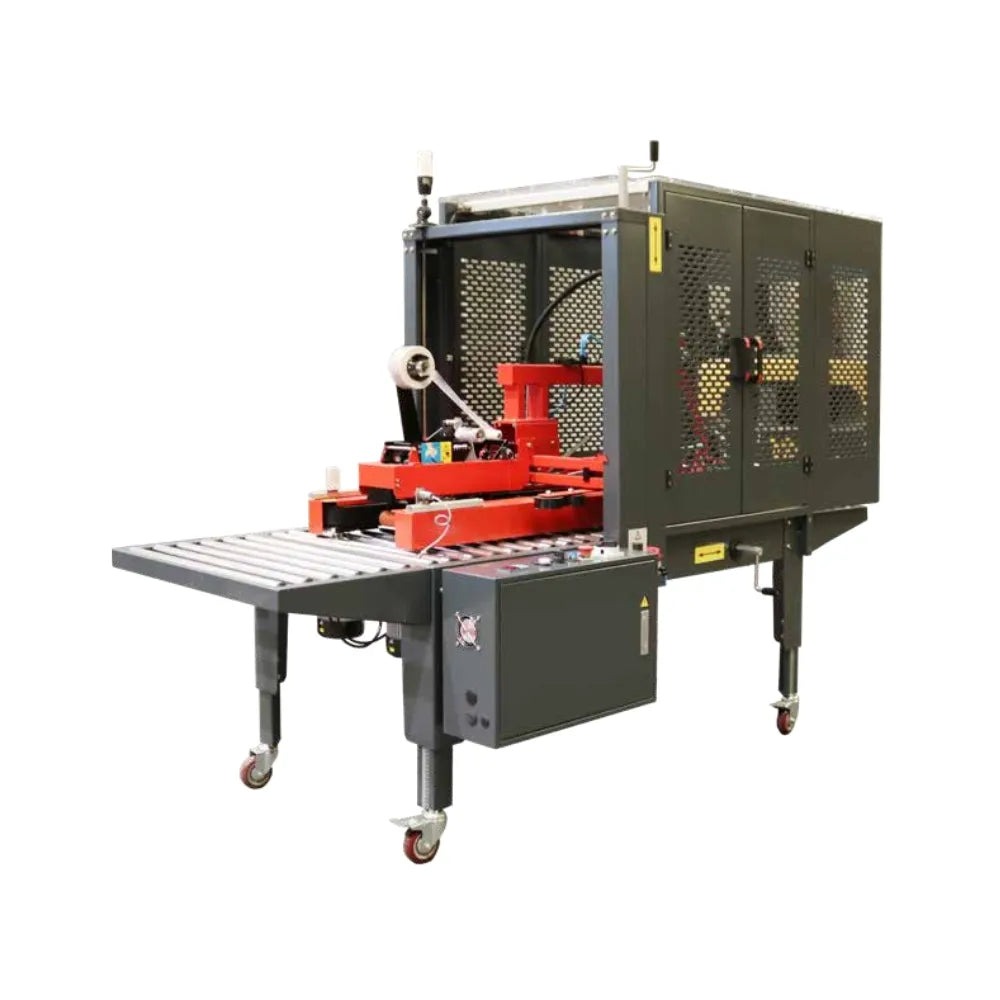
A taping machine is used to automatically seal corrugated cartons by applying adhesive tape along the top and bottom flaps of the box. This type of packaging equipment is commonly used in manufacturing facilities, warehouses, and distribution centers to ensure that packages remain securely sealed during handling, storage, and transportation. By automating the sealing process, taping machines help improve packaging speed and reduce manual labor.
Case Sealer Equipment automates the sealing of corrugated boxes with tape or glue, ensuring secure, consistent closure for faster packaging lines. Built for reliability and easy integration, these machines improve efficiency, reduce labour, and maintain product protection throughout shipping and handling.
Products
-
Sold out
-
Sold out
-
Sold out
-
Sold out
-
Sold out
-
Sold out
-
Sold out
Case Sealers and Taping Machines for Efficient Packaging Operations
A taping machine is an essential type of packaging equipment used to seal corrugated boxes quickly and consistently during packaging operations. These machines apply adhesive tape along the top and bottom flaps of a carton, ensuring that packages remain secure during storage, transportation, and distribution.
In modern warehouses and manufacturing facilities, case sealers automate the carton sealing process and eliminate the need for manual tape application. By using a reliable taping machine, companies can improve packaging speed, reduce labor requirements, and maintain consistent sealing quality across high-volume production environments.
Redemac provides industrial case sealing solutions designed to integrate with automated packaging lines and support efficient packaging operations across Canada.
What Is a Taping Machine?
A taping machine, often referred to as a case sealer or carton sealing machine, is designed to apply adhesive tape to the flaps of corrugated boxes automatically. The machine guides the carton through a series of rollers while tape heads apply pressure-sensitive tape along the seams of the box.
This process ensures that every carton is sealed uniformly and securely before it moves further down the packaging line. Compared with manual taping, automated systems significantly improve productivity and help reduce packaging inconsistencies.
In automated packaging systems, taping machines are typically installed after a case erector, where boxes are formed and filled with products before being sealed for shipment.
How Case Sealers Improve Packaging Efficiency
Automating carton sealing provides several operational advantages for manufacturers and distribution centers. A taping machine allows packaging lines to seal cartons quickly and consistently, which increases throughput and reduces packaging bottlenecks.
Automated sealing also improves carton integrity by applying uniform tape pressure across each box. This helps prevent cartons from opening during handling or transportation, reducing product damage and improving shipment reliability.
Another benefit of case sealing equipment is improved workplace ergonomics. Manual carton sealing requires repetitive movements that can slow production and create strain for workers. Automated systems streamline this process and allow operators to monitor packaging operations more efficiently.
Integration with Automated Packaging Systems
Case sealers are typically installed at the end of a packaging line after products are packed into cartons. Once filled, the carton moves through the taping machine, where the flaps are sealed automatically before being transferred to conveyors, palletizers, or other packaging systems.
In modern facilities, case sealing machines are integrated with a variety of packaging equipment such as conveyors, labeling systems, palletizing equipment, and other packaging materials used in automated end-of-line operations.
This integration helps create a streamlined packaging workflow where cartons are formed, filled, sealed, labeled, and palletized with minimal manual intervention.
Types of Case Sealing Machines
Different types of taping machines are available depending on production requirements and automation levels. Semi-automatic case sealers require an operator to position the carton before the machine seals it with tape. These systems are typically used in moderate-volume packaging environments.
Fully automatic case sealing machines automatically adjust to carton sizes and seal boxes without operator involvement. These machines are commonly used in high-volume manufacturing and distribution facilities where packaging speed and consistency are critical.
Selecting the right case sealing system depends on production volume, carton sizes, and integration with existing packaging lines.
Industries That Use Case Sealing Equipment
Case sealing machines are widely used in industries that ship products in corrugated cartons. Manufacturing companies rely on automated sealing equipment to prepare products for distribution, while logistics and warehouse operations use taping machines to seal cartons quickly during order fulfillment.
Food and beverage manufacturers, pharmaceutical companies, consumer goods producers, and e-commerce distribution centers all depend on reliable carton sealing equipment to ensure that packages remain secure throughout the supply chain.
Across these industries, case sealers play a key role in maintaining packaging efficiency and product protection.
Choosing the Right Case Sealer for Your Packaging Line
Selecting the right taping machine depends on several operational factors, including packaging speed, carton size variability, and the level of automation required. Companies with high-volume production lines typically benefit from fully automated sealing systems that can process cartons continuously.
Other operations may prefer semi-automatic machines that provide flexibility for different box sizes or product types. When evaluating case sealing equipment, businesses should consider reliability, ease of maintenance, and compatibility with existing packaging systems.
Investing in the right case sealer helps ensure consistent packaging performance and reliable shipment preparation.
Why Choose Redemac for Case Sealing Solutions?
Redemac supports manufacturers and distribution centers across Canada with advanced packaging automation solutions. Our case sealing equipment is designed to integrate seamlessly with modern packaging lines while improving packaging efficiency and operational reliability.
From equipment selection to installation and ongoing technical support, Redemac works closely with businesses to optimize their packaging processes and maintain consistent carton sealing performance.
Frequently Asked Questions
What is a taping machine used for?
How does a case sealing machine work?
A case sealing machine works by guiding a filled carton through a series of rollers while tape heads apply pressure-sensitive adhesive tape along the seams of the box. As the carton moves through the machine, the top and bottom flaps are pressed together and sealed with tape. This automated process ensures consistent carton sealing and allows packaging lines to operate more efficiently than manual taping methods.
What is the difference between a taping machine and a case sealer?
The terms taping machine and case sealer are often used interchangeably in industrial packaging. Both machines perform the same function: sealing corrugated boxes using adhesive tape. Some systems are semi-automatic and require an operator to position the carton, while fully automatic case sealers can detect box sizes and seal cartons without manual intervention.
What are the benefits of using a taping machine in packaging operations?
Using a taping machine improves packaging efficiency by automating the carton sealing process. These machines ensure consistent tape application, improve packaging speed, and reduce labor costs associated with manual sealing. Automated sealing also improves carton integrity, helping protect products during transportation and reducing the risk of damaged shipments.
What industries commonly use case sealing machines?
Case sealing machines are widely used in industries that rely on corrugated cartons for shipping and storage. Common industries include food and beverage manufacturing, pharmaceutical packaging, consumer goods production, logistics operations, and e-commerce fulfillment centers. These industries depend on automated carton sealing to maintain packaging efficiency and shipment reliability.
Can taping machines integrate with automated packaging lines?
Yes. Most modern taping machines are designed to integrate with conveyors, palletizers, labeling systems, and other packaging equipment used in automated end-of-line operations. In many packaging systems, cartons are first formed using a case erector, filled with products, and then sealed using a case sealing machine before being palletized for shipping.
What types of case sealing machines are available?
There are several types of case sealing machines depending on production requirements. Semi-automatic case sealers require an operator to place the carton into the machine before it is sealed. Fully automatic case sealers detect box sizes and seal cartons automatically as they move through the packaging line. High-volume manufacturing facilities often use automatic systems to maintain consistent packaging speeds.
How do taping machines improve packaging consistency?
Taping machines apply tape with controlled pressure and alignment, ensuring that every carton is sealed consistently. This eliminates the variability that occurs with manual sealing and helps prevent cartons from opening during shipping. Consistent sealing also improves the stability of palletized loads during transportation.
What factors should businesses consider when choosing a case sealer?
When selecting a taping machine, businesses should consider packaging speed, carton size range, production volume, and compatibility with existing packaging lines. It is also important to evaluate machine durability, ease of maintenance, and the ability to integrate with other packaging equipment used in automated packaging operations.