
Cassel
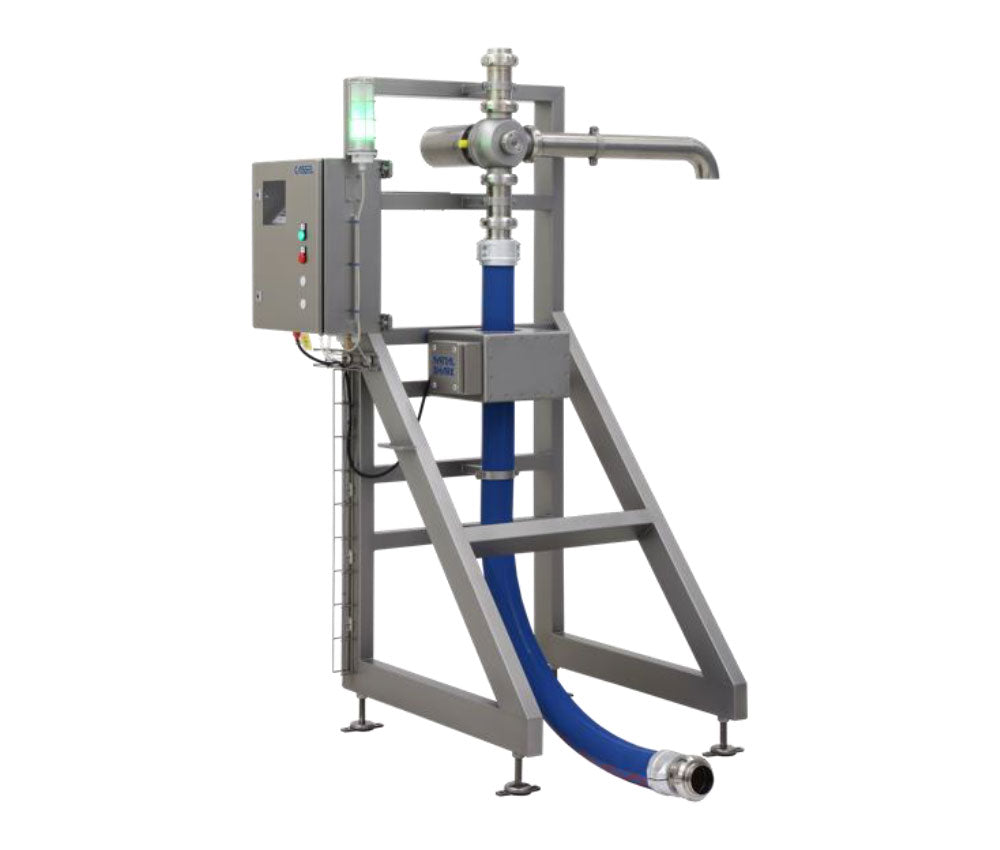
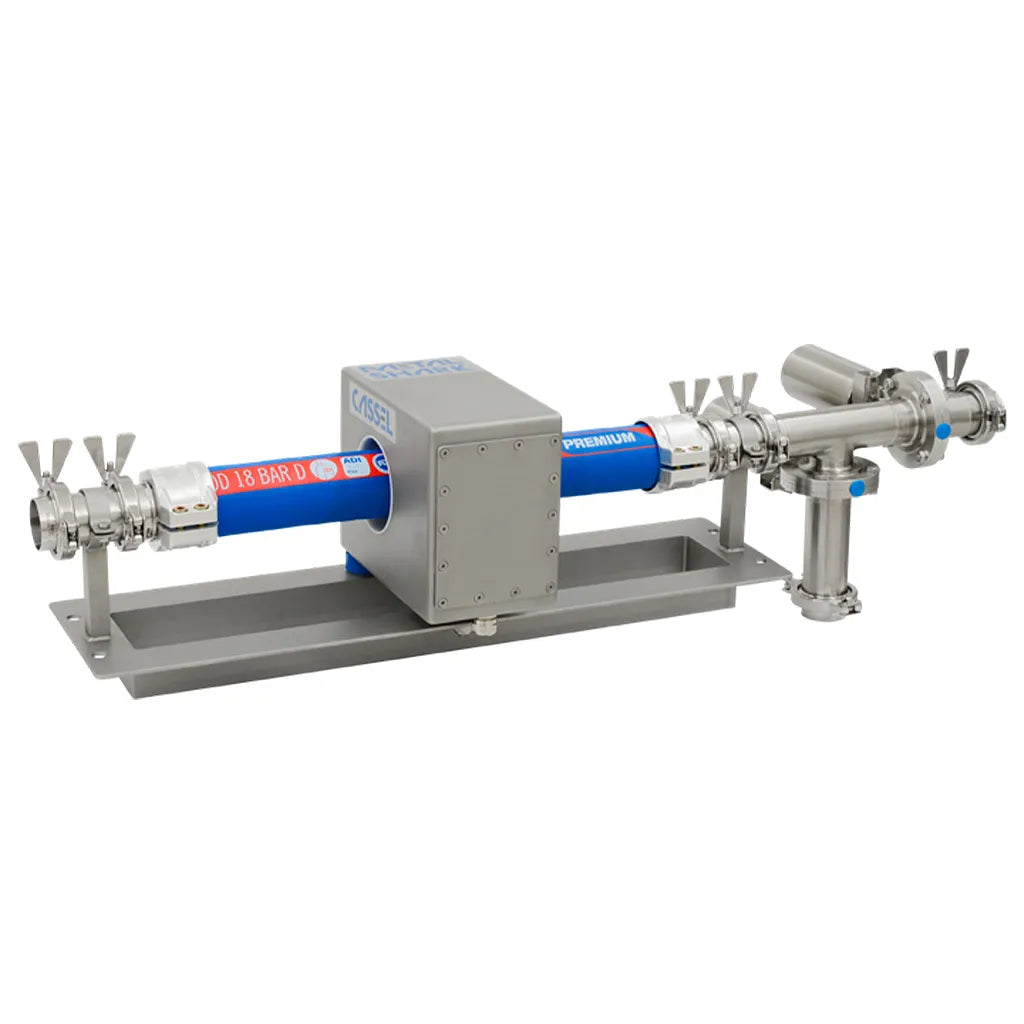
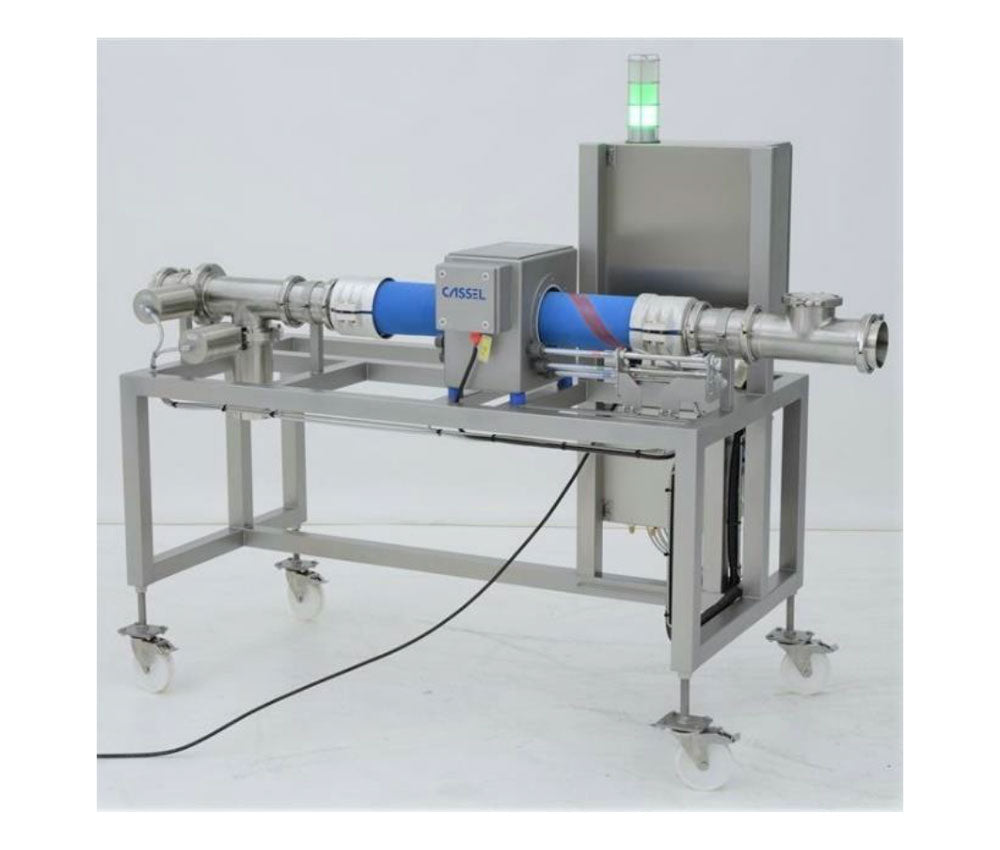
Metal Shark® In Liquid
What is Metal Detection in Liquid Processing?
Metal detection in liquid processing is a critical quality control method used to identify and remove metal contaminants from products such as sauces, beverages, dairy, and liquid foods during production. These systems are installed directly in pipelines, allowing continuous inspection of the product flow before it reaches packaging. This ensures that contamination is detected early, reducing waste and preventing unsafe products from reaching consumers.
How Does a Pipeline Metal Detection System Work?
Pipeline metal detectors operate using electromagnetic fields. As liquid products pass through the system, any metal contamination disrupts the signal, triggering an automatic rejection mechanism. This process allows manufacturers to:
- Inspect products in real time
- Maintain continuous production flow,
- Automatically remove contaminated product
Why Metal Detection is Essential for Liquid Products?
Metal contamination can occur at multiple stages of production due to machinery wear, raw materials, or processing errors.
Implementing a liquid metal detection system helps manufacturers:
- Ensure compliance with HACCP and food safety regulations,
- Protect consumers from contamination risks,
- Prevent costly recalls and production losses
- Safeguard downstream equipment
For industries handling liquid and paste products, this is a critical step in quality assurance.
Where the Metal Shark® In Liquid System Delivers the Most Value
This system is specifically designed for continuous production environments where liquid or semi-liquid products must be inspected without slowing down operations.
It is particularly effective in:
- Beverage production lines
- Dairy and liquid food processing
- Sauce, soup, and condiment manufacturing
- Pharmaceutical liquid production
Because it is installed directly within the pipeline, contamination is detected and removed before it reaches filling or packaging stages.
Pipeline vs Conveyor Metal Detection: Key Differences
| Feature | Pipeline Metal Detection | Conveyor Metal Detection |
| Product Type | Liquids, pastes, slurries | Solid or packaged products |
| Installation | Integrated into the pipeline | Installed over the conveyor belt |
| Inspection Stage | During processing | After processing |
| Efficiency | Continuous inspection | Batch or line inspection |
Is This System Right for Your Production Line?
The Metal Shark® In Liquid system is ideal for businesses that process liquid or semi-liquid products and require continuous inspection without disrupting production flow.
If your operation involves pipeline-based processing and strict hygiene or compliance standards, this system provides a reliable and efficient solution for maintaining product safety.
Protect your production line and ensure product safety with advanced pipeline metal detection.
METAL SHARK® IN Liquid Self-Monitoring
Metal detectors are critical control points in every production line, and the components connected to them should also be continuously monitored
| Material | Properties |
|---|---|
| Compressed Air Monitoring | Reports an error if the air pressure is too low for the functionality of the sepa flaps. |
| Reject Monitoring | Warns if the reject unit has not switched correctly after metal detection. |
| Testport | Simple version, without BF valves, only one tube with sealing cap (Tric-lamp) for inserting the test ball, incl. test bodies |
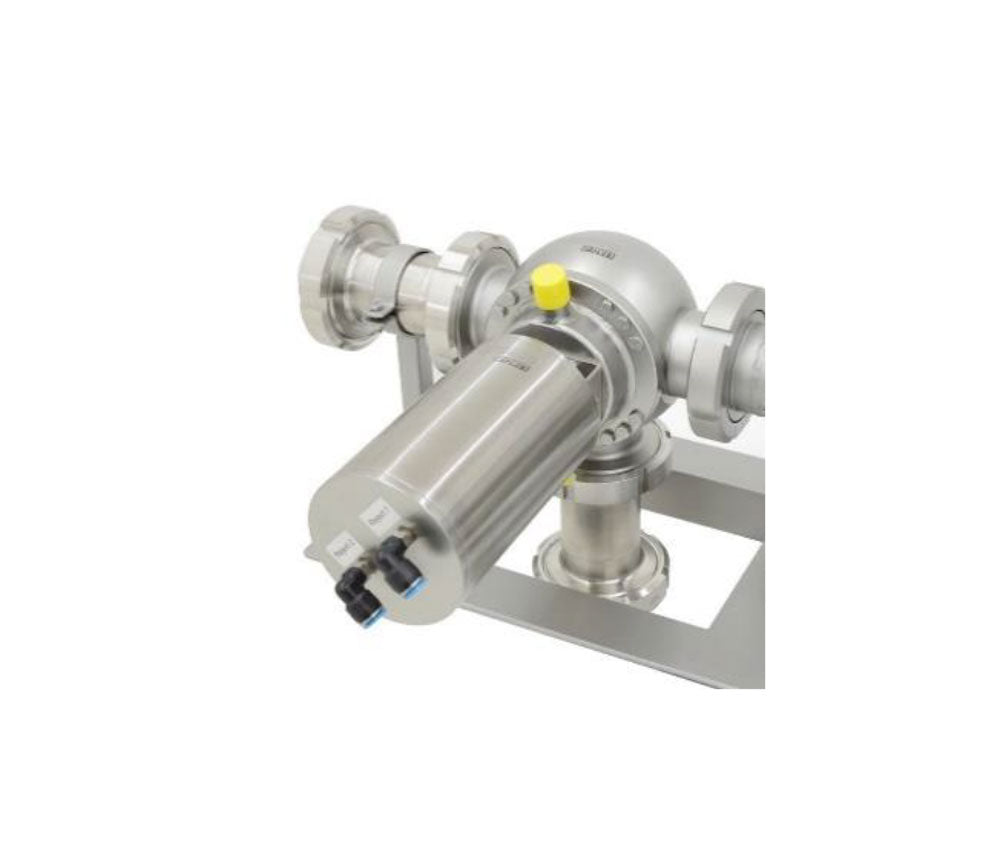
| Testport Check & Catch | Tube with sealing cap for insertion of a test body and wide ejection valve (stainless steel 1.4404 / AISI316L, IP65) to ensure the flow of material during the function test |
| Autotest | Functional test that does not require opening the product pipelines: Test pieces (FE/NFE/VA) are moved with compressed air through a separate test tube. The control unit indicates which sphere sizes are to be tested. Incl. push button for FE, NFE, and VA testing, pneumatic valve, test specimen. |
| Test Balls | Test balls, diameter 10 mm, made of plastic POM, with embedded metal balls made of iron, brass and stainless steel, certified. Ball size, metal type, and certificate number are embedded in the test ball. |