
Sojet
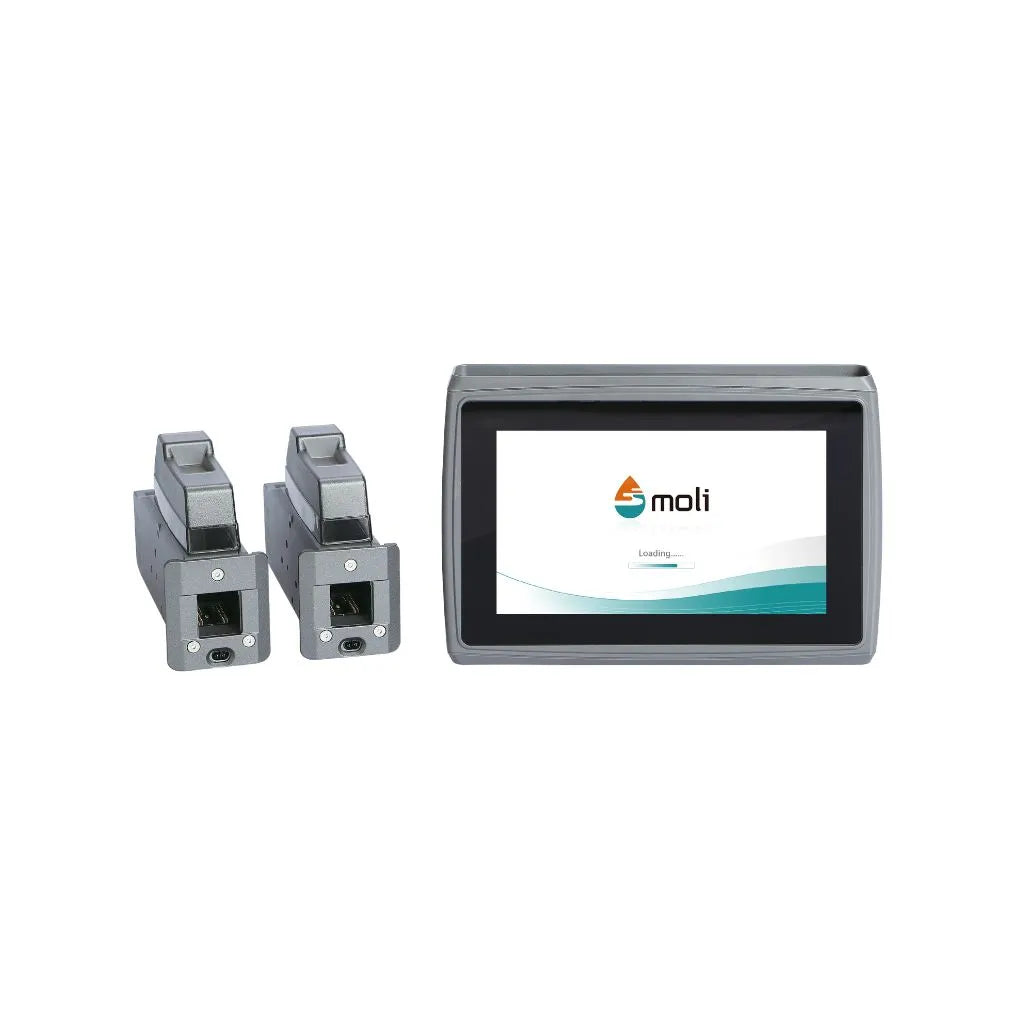
MoEco 2000 TIJ Printer
What is the MoEco 2000 TIJ Printer?
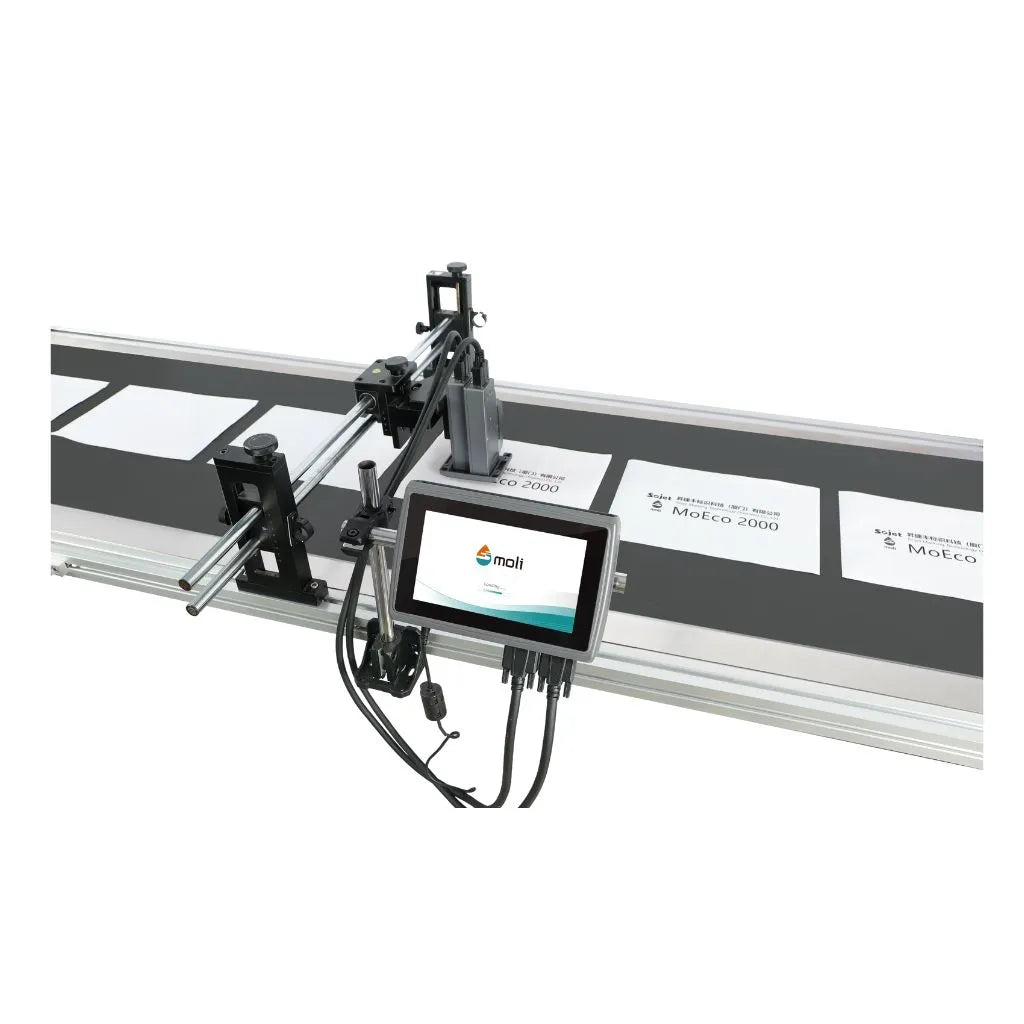
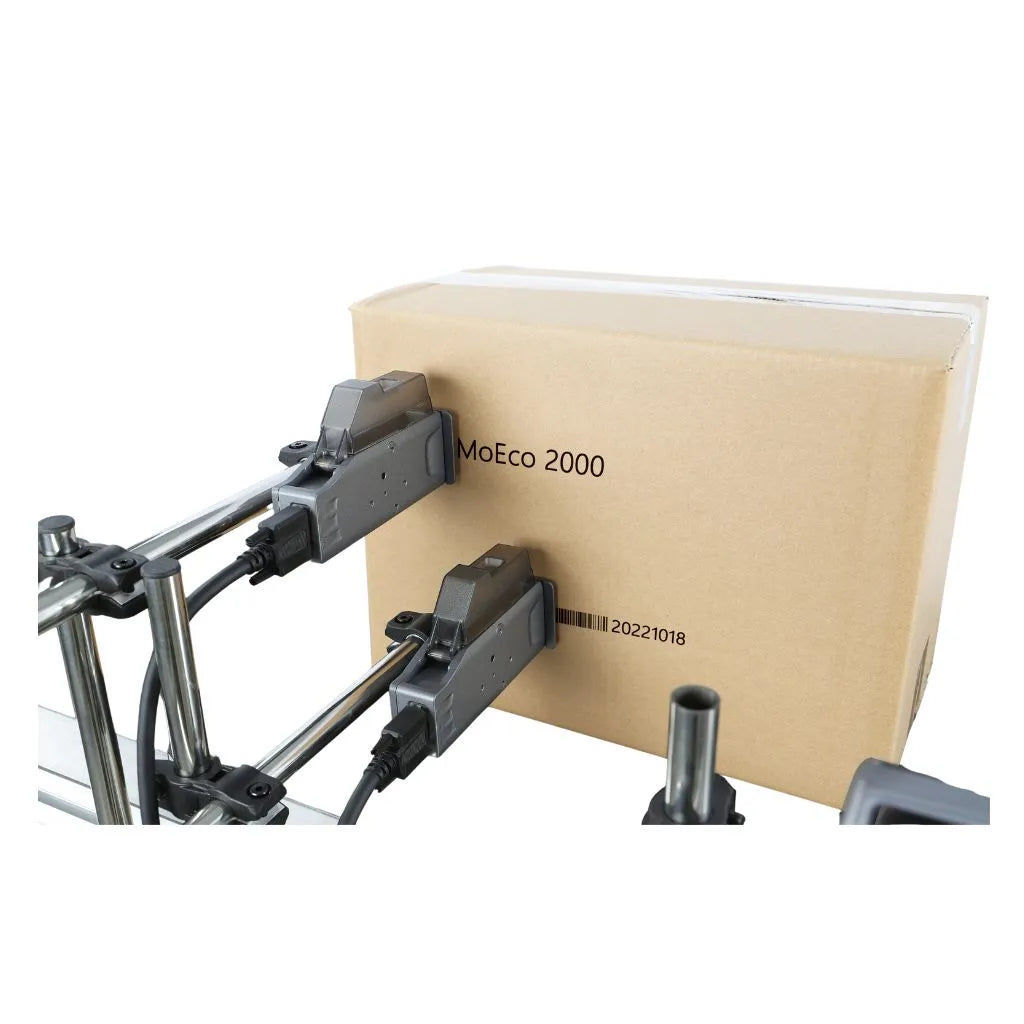
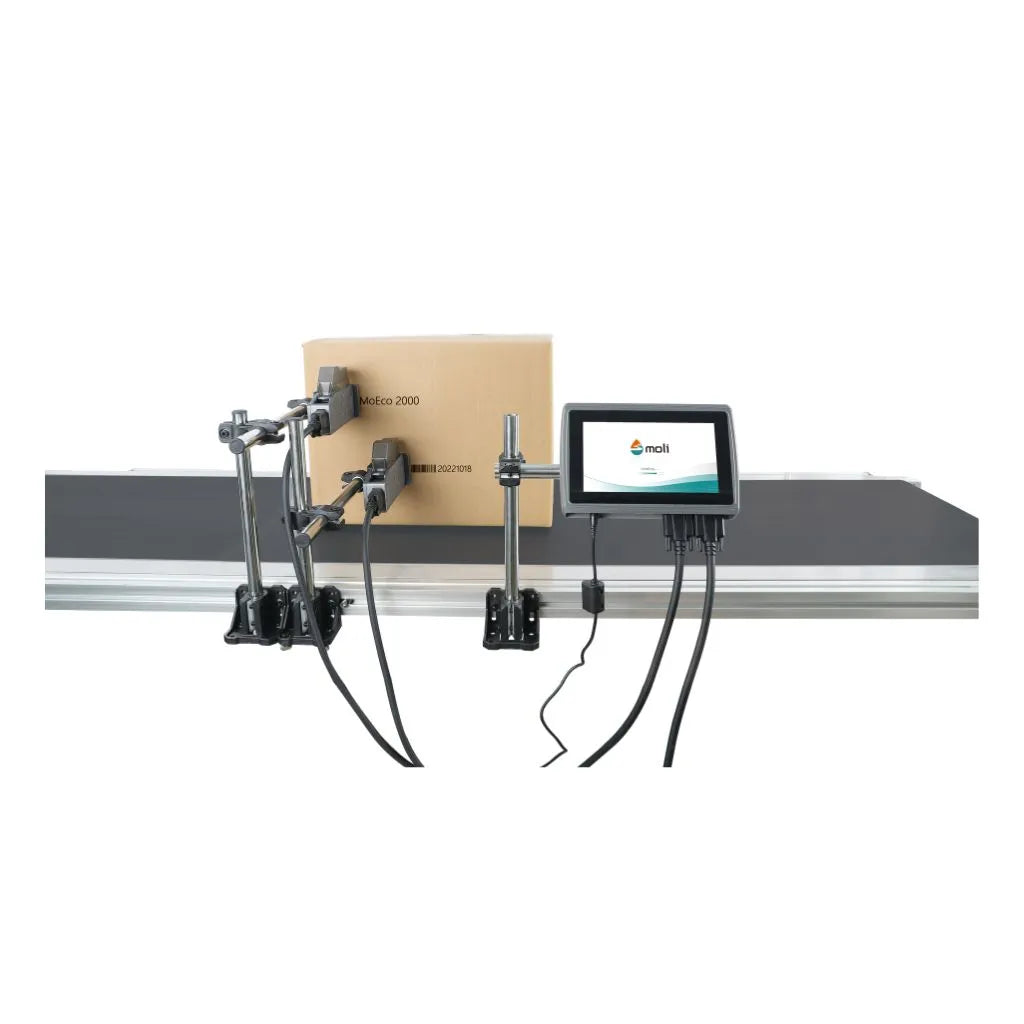
The MoEco 2000 is an industrial thermal inkjet (TIJ) printer used to print high-resolution barcodes, expiry dates, and batch codes on packaging materials. It is designed for low maintenance, clean operation, and precise variable data printing in production environments.
Unlike traditional inkjet systems that rely on complex fluid management, the MoEco 2000 operates using cartridge-based TIJ technology. This makes it significantly cleaner and easier to maintain, while still delivering sharp, scannable codes at resolutions of up to 600 dpi. For manufacturers looking to simplify operations without compromising print quality, TIJ systems like the MoEco 2000 have become a preferred choice.
Understanding TIJ vs CIJ: Which Technology Fits Your Production Line?
When evaluating industrial coding solutions, many manufacturers find themselves comparing thermal inkjet (TIJ) and continuous inkjet (CIJ) technologies. Both serve essential roles in production environments, but they are designed for different operational needs.
TIJ printers, such as the MoEco 2000, are best suited for applications where print quality and simplicity are key. They excel in printing high-resolution barcodes, QR codes, and detailed text on flat or semi-porous surfaces like cartons, labels, and packaging. Because they use disposable ink cartridges, they eliminate the need for solvents, pumps, and frequent maintenance, making them particularly attractive for clean production environments such as food and pharmaceutical facilities.
On the other hand, CIJ printers are typically chosen for high-speed production lines and challenging surfaces. They are more effective when printing on curved, uneven, or non-porous materials such as bottles, cans, and plastics. However, this flexibility comes with increased maintenance requirements and operational complexity.
Rather than viewing TIJ and CIJ as competing technologies, many modern production facilities use them together. TIJ handles high-resolution packaging needs, while CIJ supports continuous, high-speed marking on diverse surfaces. The key is selecting the right tool for the specific application, and for many packaging-focused operations, TIJ offers the best balance of performance, simplicity, and cost efficiency.
TIJ printers are preferred for clean, high-resolution coding with low maintenance, making them ideal for food, pharma, and packaging industries.
In industries where accurate labeling is essential. In food production, for example, clear and consistent date coding is required to meet CFIA standards and ensure consumer safety. In the pharmaceutical and nutraceutical sectors, batch traceability and serialization are critical for regulatory compliance. Even in logistics and e-commerce, reliable barcode printing directly impacts supply chain efficiency.
Additionally, Canadian businesses often require bilingual labeling capabilities. With its flexible printing system, the MoEco 2000 allows manufacturers to easily manage variable data, making it easier to adapt to both English and French labeling requirements without adding complexity to the production process.
TIJ vs CIJ Printers – Which is Better for Your Production Line?
| Feature | TIJ Printer (MoEco 2000) | CIJ Printer |
| Print Quality | High (up to 600 dpi) | Medium |
| Maintenance | Minimal (cartridge-based system) | High (requires solvents, pumps, servicing) |
| Cost | Lower upfront and operational cost | Higher initial and maintenance cost |
| Setup | Plug & play, easy to operate | Complex setup and calibration |
| Best For | Packaging, cartons, labels, and high-resolution coding | Bottles, curved surfaces, high-speed production |
TIJ printers are preferred for clean, high-resolution coding with low maintenance, making them ideal for food, pharma, and packaging industries.
In industries where accurate labeling is essential. In food production, for example, clear and consistent date coding is required to meet CFIA standards and ensure consumer safety. In the pharmaceutical and nutraceutical sectors, batch traceability and serialization are critical for regulatory compliance. Even in logistics and e-commerce, reliable barcode printing directly impacts supply chain efficiency.
Additionally, Canadian businesses often require bilingual labeling capabilities. With its flexible printing system, the MoEco 2000 allows manufacturers to easily manage variable data, making it easier to adapt to both English and French labeling requirements without adding complexity to the production process.
Where the MoEco 2000 Delivers the Most Value?
The real strength of the MoEco 2000 lies in environments where production teams need dependable, high-quality printing without the operational burden of traditional systems.
It performs particularly well in packaging lines where products move at moderate to high speeds and require consistent, readable codes. Whether printing directly onto cartons, applying codes to labels, or marking secondary packaging, the system ensures clarity and precision across every unit.
Because it eliminates many of the maintenance challenges associated with CIJ systems, it is also an excellent choice for facilities looking to reduce downtime and simplify operator training. Teams can focus on production rather than equipment upkeep, which ultimately improves overall efficiency.
Operational Benefits That Impact Your Bottom Line
Beyond its technical capabilities, the MoEco 2000 delivers measurable business value. By removing the need for solvents, filters, and complex fluid systems, it significantly reduces maintenance costs and operational interruptions. Cartridge-based printing also minimizes waste and makes inventory management simpler.
From a quality perspective, the system helps ensure that every printed code is sharp and scannable, reducing the risk of rejected products or compliance issues. Over time, this consistency contributes to stronger brand reliability and fewer costly errors in the supply chain.
For many manufacturers, the shift to TIJ is not just a technical upgrade; it’s an operational improvement that supports both efficiency and long-term cost control.
Is the MoEco 2000 the Right Choice for You?
Choosing the right coding system depends on your production setup, materials, and long-term goals. The MoEco 2000 is particularly well-suited for businesses that prioritize print clarity, low maintenance, and ease of integration into existing production lines.
If your operation involves high-resolution coding on packaging, requires flexibility in variable data printing, or aims to reduce the complexity of traditional inkjet systems, this solution offers a strong fit. For companies transitioning from older CIJ systems or looking to optimize packaging efficiency, it provides a modern, streamlined alternative.
Why Choose the MoEco 2000 TIJ Printer?
| Feature | Details |
| Technology | HP TIJ 2.5 Thermal Inkjet Technology |
| Resolution | Vertical: 600 dpi; Horizontal: 40-1200 dpi (Single head) |
| Communication Protocol | Plain code protocol, easy for system integration and secondary development. |
| Screen | 7-inch color capacitive touch screen |
| Dimensions | Controller: 207×134×34mm Print head: 156×93×49mm |
| Language | Chinese, English, Korean, Spanish, Japanese, French, German, Italian, Turkish |
| Keyboard | Chinese, English, Korean, Arabic, Russian, Spanish, French, German |
| Counter | Ordinary counter, the carry bit source can be set flexibly |
| Printing Height | 1-25.4mm (Two printheads, free combination) |
| Printing Speed | Up to 60m/min |
| Printing Performance | The speed of QR code printing is up to 5pcs/sec. |
| Supported Barcode | Codebar, Code25, Code39, Code93, Code128, UPCA, UPCE, EAN QR Code (GSI supported), Data Matrix (GSI supported), Grid Matrix, Maxicode, PDF417 (Others upon request) |
| Date Format | The date format can be set flexibly |
| Interface |
Ethernet interface: *1 USB Interface: *1 (USB flash drive, scanner, and auxiliary communication equipment) UVI interface: Connect to cable box or extended cable box Cable box interface: Alarm kit, photocell, encoder, I/O (2 inputs, 2 outputs), RS232 Extended Cable box interface: Alarm kit, photocell, encoder, I/O (6 inputs, 5 outputs), RS232 DC interface: Power entry DB15 interface: Connect with printhead *2 |
| Ink Management | Recognize the ink type and choose the best suitable parameters automatically All original HP and third-party inks are supported Automatic measurement system for ink consumption Optical Spring-back mechanism |
| Set up | Automatic adjustment of printing height |
| Environment Requirements | Working: -10°C - +55°C Storage: -20°C - +70°C |
| Input Power | AC 100-240V 50-60Hz |
| Output Power | 24V 4A, 96.0W |
| Product Certification | CE, FCC |