
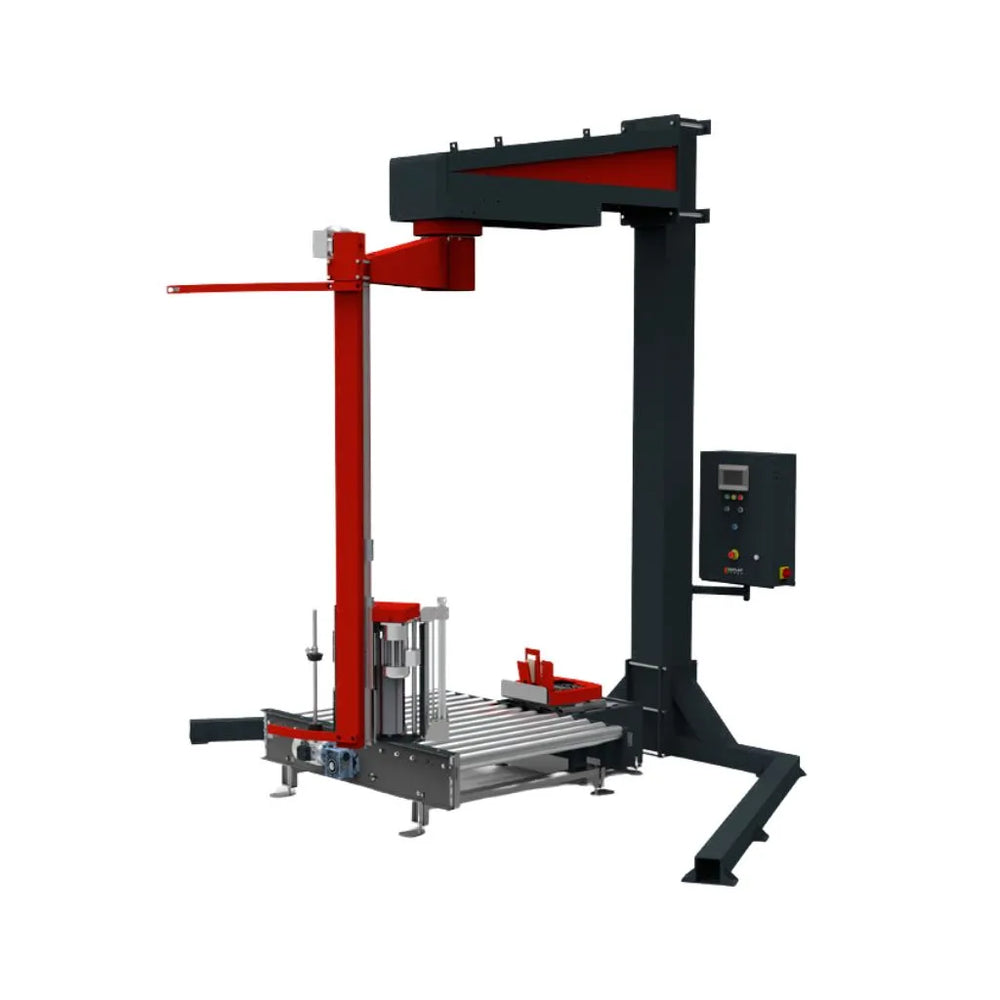
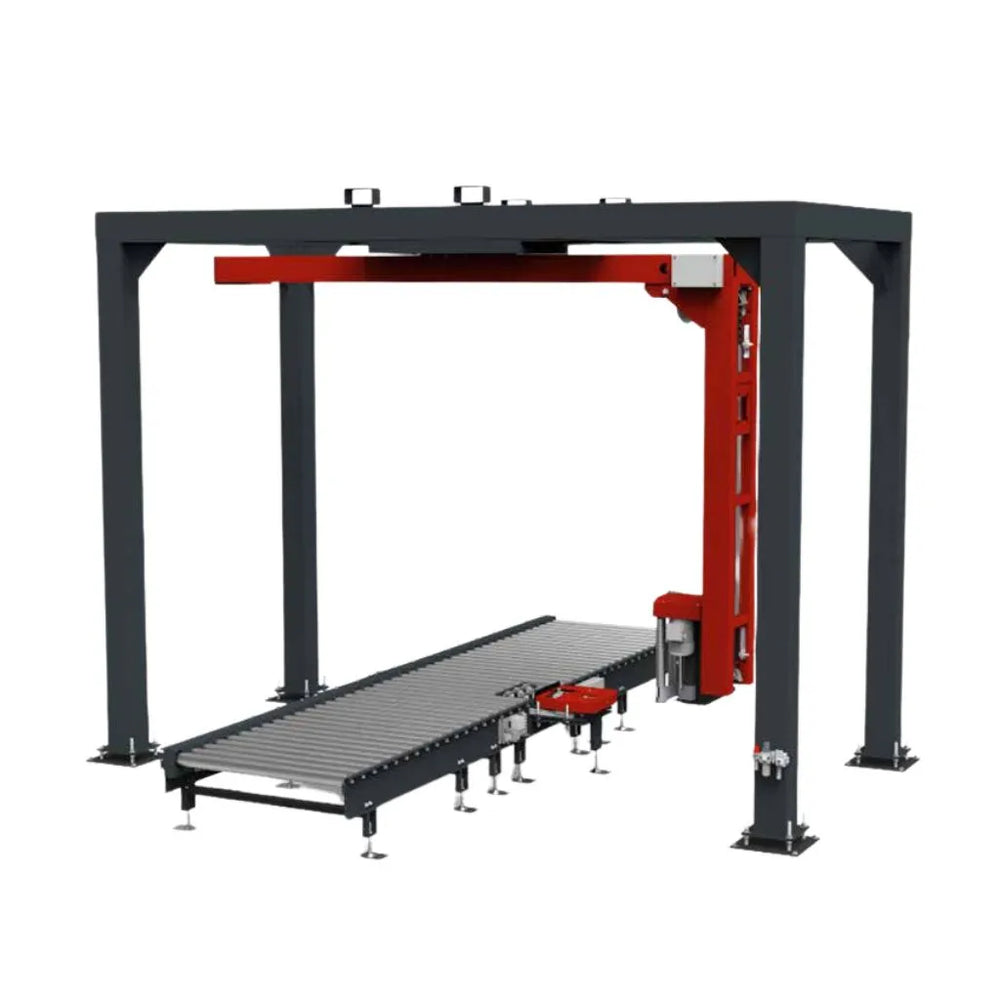
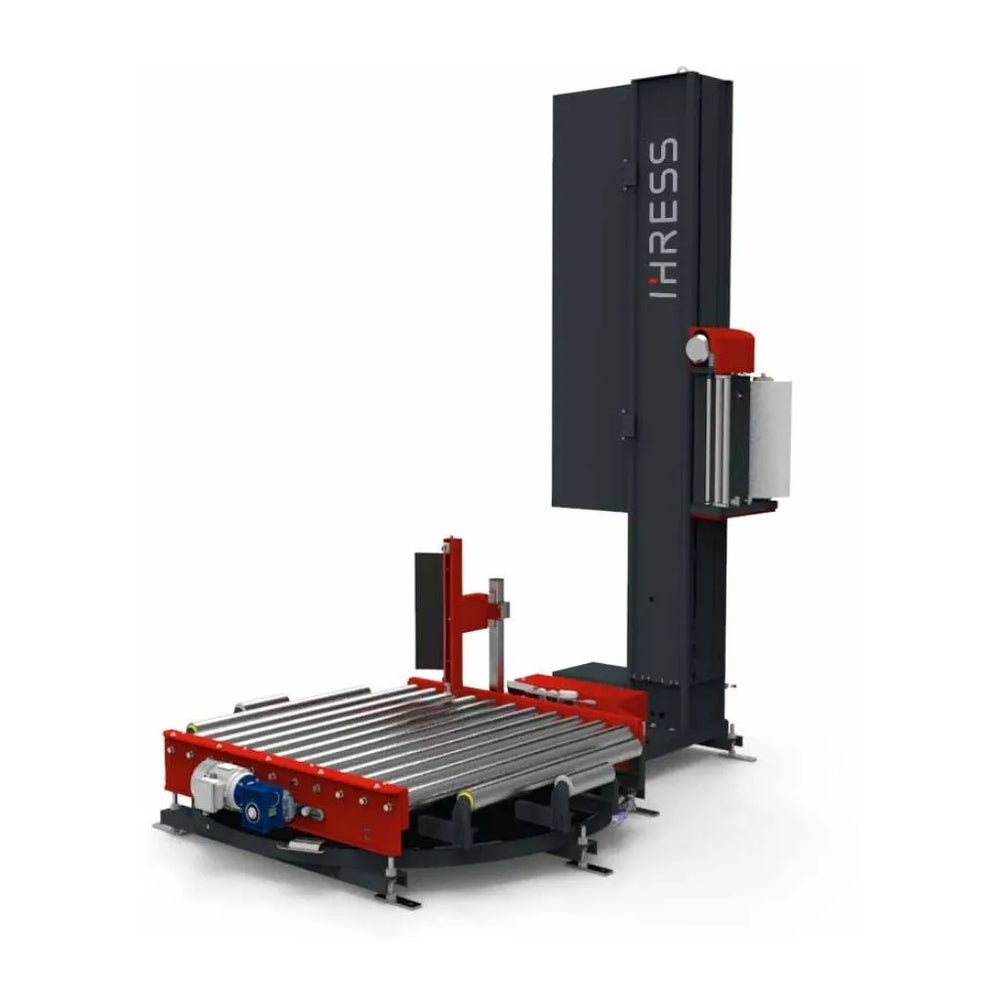
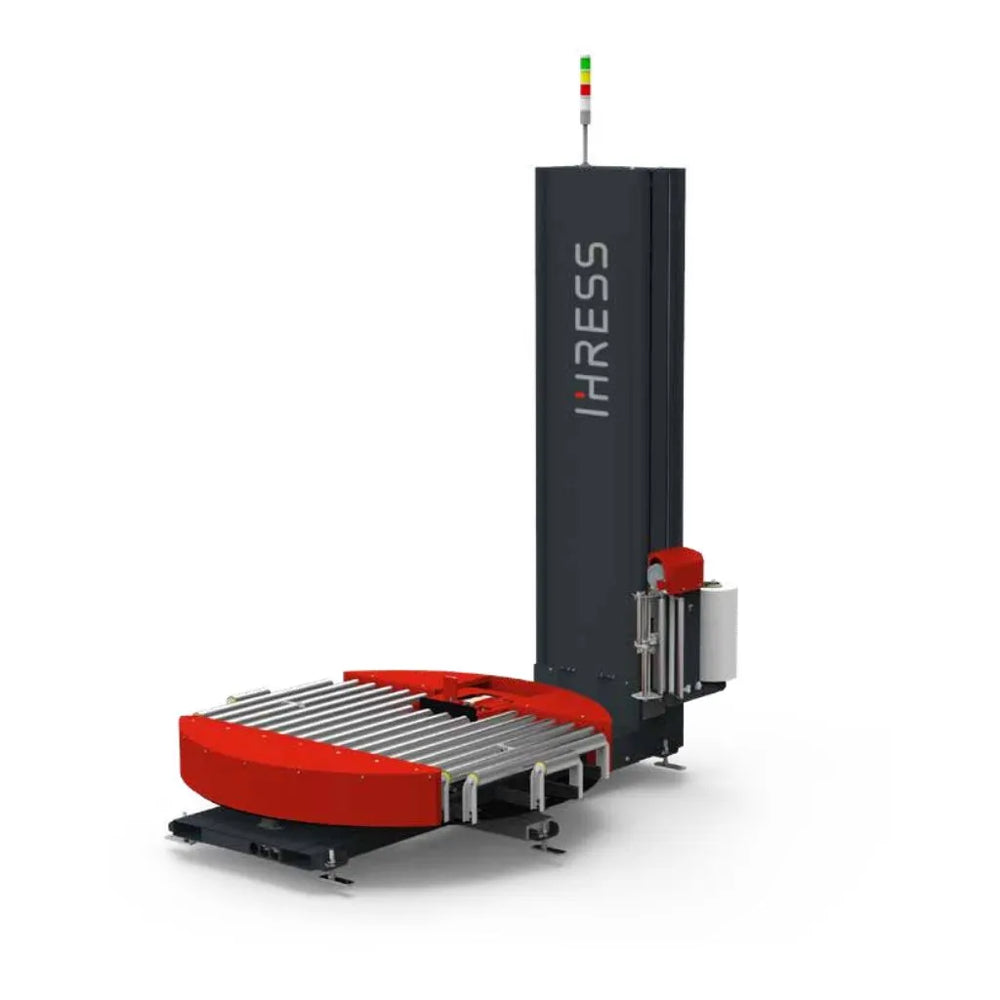
A pallet wrapping machine works by applying stretch film around a palletized load to secure products for transportation or storage. The machine rotates either the pallet or a wrapping arm while dispensing stretch film around the load. This process creates a tight protective layer that stabilizes products and prevents shifting during shipping.
Redemac's automatic pallet wrappers and skid wrapping machines are engineered for Canadian manufacturers who need fast, consistent, and fully automated stretch wrapping at the end of their production line. Whether you run a turntable wrapper, a rotary arm system, or a fully integrated in-line conveyor wrapping line, our equipment delivers repeatable load stability, reduced film waste, and zero operator intervention, wrap after wrap, shift after shift.
Trusted by food & beverage, manufacturing, distribution, and logistics operations across Canada since 1987, our automatic pallet wrapping systems integrate seamlessly into existing end-of-line packaging workflows.
Trusted by food & beverage, manufacturing, distribution, and logistics operations across Canada since 1987, our automatic pallet wrapping systems integrate seamlessly into existing end-of-line packaging workflows.
Products
-
Sold out
-
Sold out
-
Sold out
-
Sold out
Automatic Pallet Wrappers for Modern Packaging Lines
Automatic pallet wrappers are essential packaging equipment used in warehouses, manufacturing facilities, and distribution centers to stabilize palletized loads before shipping. By automatically applying stretch film around stacked products, these machines help secure goods on pallets, protect them from damage, and improve handling during transportation.
A pallet wrapping machine is designed to streamline the end-of-line packaging process by replacing manual wrapping methods with consistent and efficient automation. Instead of operators manually wrapping pallets with stretch film, automatic systems apply the film evenly and securely around the load, ensuring stability and reducing material waste.
Redemac provides reliable pallet wrappers that integrate easily with automated packaging lines and logistics operations across Canada.
What Is a Pallet Wrapping Machine?
A pallet wrapping machine is packaging equipment, used to wrap stretch film around palletized products to stabilize and protect them during storage and transportation. The machine rotates either the pallet or the wrapping arm while applying film around the load to create a secure protective layer.
Modern pallet wrappers are designed to deliver consistent film tension and coverage, which helps reduce product damage and improve load stability. Compared with manual wrapping, automated systems improve packaging speed, reduce labor requirements, and ensure that each pallet is wrapped consistently according to operational standards.
These machines are commonly used in high-volume manufacturing environments where efficiency and product protection are critical.
Pallet Wrappers & Skid Wrapping Machines: What's the Difference?
In Canadian manufacturing and warehousing, the terms pallet and skid are often used interchangeably, and so are pallet wrapper and skid wrapping machine. A pallet typically has a bottom deck board, while a skid does not, but both are loaded, stretch-wrapped, and shipped in the same way using the same wrapping equipment. At Redemac, our automatic pallet wrappers are fully compatible with both pallets and skids across all standard sizes, including 48" × 40" GMA pallets and custom skid dimensions common in food processing, distribution, and industrial manufacturing across Canada.
Types of Automatic Pallet Wrapping Machines
Not all automatic pallet wrappers are the same. Choosing the right system depends on your line speed, floor space, pallet configuration, and level of automation required.
Turntable Pallet Wrapper: The pallet rotates on a motorized turntable while the film carriage travels up and down a fixed mast.
Best for: standard pallets, moderate throughput (30–60 pallets/hr), floor-level loading.
Rotary Arm Pallet Wrapper: The pallet stays stationary while a rotating arm carries the film around it.
Best for: heavy, unstable, or irregular loads that cannot spin; high-speed lines; tall pallet stacks.
In-Line / Conveyor Pallet Wrapper: Fully integrated into the conveyor line, pallets pass through the wrapper without stopping.
Best for: fully automatic lines, high throughput (60+ pallets/hr), lights-out or unmanned operations.
Benefits of Automatic Pallet Wrapping Systems
Automatic wrapping systems provide several operational advantages for companies managing large packaging volumes. By automating pallet wrapping, facilities can significantly improve packaging speed while maintaining consistent load stability.
Automated machines also help reduce stretch film usage by applying precise tension and film placement. This not only lowers material costs but also improves sustainability by minimizing packaging waste.
Another important benefit is improved workplace safety. Manual pallet wrapping can require repetitive bending and walking around heavy loads. Automated systems eliminate much of this manual effort while allowing operators to monitor multiple packaging operations simultaneously.
In addition, automated pallet wrapping helps maintain uniform packaging standards across the production line, improving pallet stability during storage, transportation, and distribution.
Key Features of Our Automatic Pallet Wrappers
- Fully Automatic Operation — No operator required during wrapping cycles. Pallets load, wrap, and discharge automatically, freeing your team for higher-value tasks and enabling lights-out end-of-line operation.
- Pre-Stretch Film System — Built-in powered pre-stretch units extend stretch film up to 250–300% before application, significantly reducing film consumption per pallet and lowering your packaging material costs.
- Programmable Wrap Profiles — Store multiple wrap programs for different pallet heights, weights, and products. Operators select the right profile with a single button press — no manual adjustment needed.
- Top Pressure Platen (optional) — A top-press plate stabilizes tall or top-heavy loads during wrapping, preventing shifting and improving load integrity for transport.
- Remote Control & PLC Integration — Compatible with PLCs, SCADA systems, and remote monitoring. Many models include a wireless remote for operator convenience and safety.
- Scale Integration (optional) — Integrate a pallet scale directly into the turntable to capture gross weight at the point of wrapping — eliminating a separate weigh station in your workflow.
- Variable Speed Control — Adjust turntable and carriage speeds independently to match your line speed, load stability requirements, and film type.
Integration with End-of-Line Packaging Systems
Automatic pallet wrappers are typically installed at the end of packaging lines where finished products are stacked onto pallets. Once the pallet is complete, the wrapping system automatically applies stretch film to secure the load before it moves to shipping or storage.
These systems can integrate with a variety of packaging automation solutions, including conveyors, palletizers, labeling systems, and warehouse management systems. When integrated into a complete packaging workflow, pallet wrapping equipment helps manufacturers improve operational efficiency and reduce bottlenecks in the packaging process.
Modern machines also include programmable controls that allow operators to adjust wrapping patterns, film tension, and cycle speeds based on product type or pallet configuration.
Industry Applications for Automatic Pallet Wrapping
Food & Beverage Packaging: Automatic pallet wrappers are essential for food & beverage operations where speed, hygiene, and load integrity are non-negotiable. Wrap pallets of bottles, cans, cartons, bags, and trays consistently at high line speeds. Stainless-compatible and washdown-rated models are available for facilities with strict sanitation requirements. Secure loads for cold storage, refrigerated transport, and distribution centre handling.
Manufacturing & Industrial Distribution: Protect heavy or irregularly shaped loads, automotive parts, hardware, metal components, and bagged materials with consistent, tight stretch wrapping that prevents load shift in transit. Rotary arm systems are ideal for unstable or oversized industrial skids that cannot be spun on a turntable.
Warehousing & Third-Party Logistics (3PL): High-throughput 3PL operations benefit from in-line conveyor pallet wrappers that integrate directly with inbound and outbound conveyor systems, wrapping pallets without operator intervention and maintaining throughput at peak shipping volumes.
Pharmaceuticals & Consumer Goods: Ensure consistent, documented wrapping of pharmaceutical pallets for regulatory compliance and damage-free distribution. Programmable wrap profiles allow different wrap specifications to be applied to different product lines automatically.
Building Materials & Hardware: Heavy, bulky, or sharp-edged loads, such as lumber, pipes, hardware, and construction materials, require the stability of a rotary arm or high-force stretch wrapping. Top-pressure platens and corner board applicators can be integrated for maximum load protection.
How to Choose the Right Automatic Pallet Wrapper
- Throughput & Line Speed — How many pallets per hour do you need to wrap? Turntable wrappers typically handle 30–60 pallets/hr; rotary arm systems can exceed 80/hr; in-line conveyor systems are designed for 60–120+ pallets/hr in continuous operation.
- Load Type & Stability — Can your load spin? Heavy, fragile, tall, or unstable loads (liquids, drums, loose product) require a rotary arm wrapper. Standard stable pallets can use a turntable system.
- Level of Automation — Do you need a standalone automatic wrapper or full in-line integration with your conveyor, label applicator, and checkweigher? Define your end-of-line automation level before specifying equipment.
- Floor Space & Layout — Turntable systems have the smallest footprint. Rotary arm systems require clearance for the arm swing. In-line systems require a straight conveyor run through the wrapper.
- Film Type & Pre-Stretch — Match your stretch film specification (thickness, cast vs blown, pre-stretch ratio) to the wrapper's carriage capability. High pre-stretch (250–300%) reduces film cost per pallet significantly.
- Optional Integrations — Do you need a built-in pallet scale, top-pressure platen, remote control, corner board applicator, or label applicator integration? Define these before purchasing to ensure compatibility.
- Environment & Wash-Down Rating — Food, pharmaceutical, and cold-storage environments may require IP-rated or stainless-steel components. Confirm the machine's IP rating matches your facility's cleaning and temperature requirements.
Why Source Your Automatic Pallet Wrapper from Redemac?
Redemac has been Canada's trusted supplier of industrial packaging and end-of-line automation equipment since 1987. When you purchase a pallet wrapping system through Redemac, you're not just buying a machine, you're gaining access to expert application support, fast parts availability, and a service team that understands Canadian manufacturing environments.
- Full system range — Turntable, rotary arm, and in-line automatic pallet wrappers for every throughput level, load type, and facility layout.
- Application engineering — Our specialists assess your line speed, load configuration, film requirements, and integration needs before recommending equipment.
- End-of-line integration expertise — We supply and integrate pallet wrappers alongside label applicators, checkweighers, case sealers, and conveyor systems for complete end-of-line solutions.
- Canadian distribution & support — Fast shipping and technical service across Canada, with parts stocked locally to minimize downtime on your production line.
- Transparent pricing — Clear quotes with no hidden fees. Financing options available for capital equipment purchases.
Frequently Asked Questions
How does a pallet wrapping machine work?
What are the advantages of using automatic pallet wrappers?
Automatic pallet wrappers improve packaging efficiency by wrapping pallets faster and more consistently than manual methods. They reduce labor requirements, optimize stretch film usage, and help maintain consistent load stability across high-volume packaging operations. Automated wrapping systems also improve workplace safety by reducing repetitive manual wrapping tasks.
What types of pallet wrapping machines are available?
There are several types of pallet wrapping machines used in industrial packaging environments. Turntable wrappers rotate the pallet while the film carriage moves vertically. Rotary arm wrappers rotate the wrapping arm around a stationary pallet, which is ideal for unstable loads. Fully automatic pallet wrappers are integrated into conveyor systems and operate with minimal operator involvement.
How fast can an automatic pallet wrapping machine operate?
The speed of an automatic pallet wrapping machine depends on the model and configuration, but many systems can wrap between 20 and 60 pallets per hour. High-speed automated systems used in large distribution centers may operate even faster when integrated with palletizing and conveyor systems.
What industries use pallet wrapping machines?
Pallet wrapping machines are widely used in industries that ship products on pallets. These include food and beverage manufacturing, pharmaceuticals, consumer goods production, logistics operations, and warehouse distribution centers. In these environments, pallet wrappers help stabilize loads and protect products during transportation.
How does pallet wrapping improve load stability?
Stretch film applied by pallet wrapping machines creates tension around the load, holding products tightly together on the pallet. This prevents shifting, collapsing, or damage during handling and transportation. Consistent film application also improves pallet stacking stability during warehouse storage.
Can pallet wrapping machines reduce packaging material costs?
Yes. Modern pallet wrapping machines use controlled film tension and programmable wrapping patterns to optimize stretch film usage. This allows companies to secure pallet loads effectively while reducing the amount of film required, lowering packaging material costs.
What should businesses consider when choosing pallet wrapping equipment?
When selecting pallet wrapping equipment, businesses should consider production volume, pallet dimensions, load stability requirements, and integration with existing packaging systems. Machine durability, film efficiency, and automation level are also important factors when choosing the right system for a packaging operation.